Trends offer the clearest opportunities in the market. Before you can trade them, you need to be able to identify them, understand what is driving them, and stay aligned with them. This lesson provides the tools to do all three.
What Is a Trend?
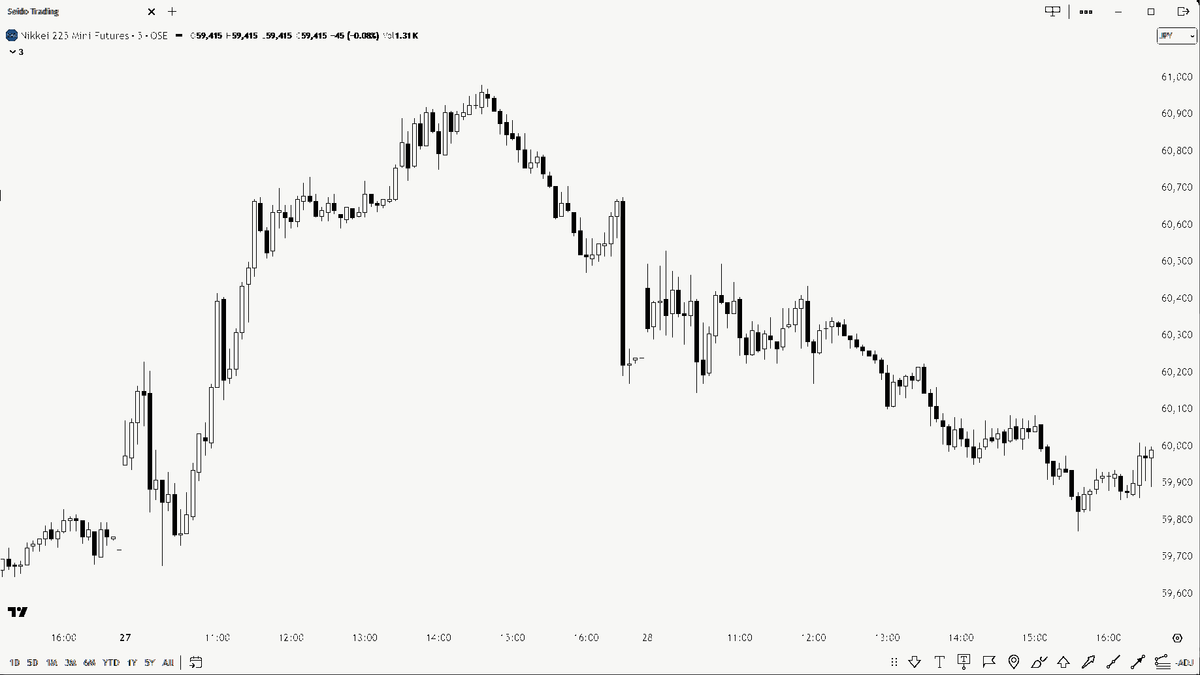
A trend is any series of higher or lower prices over time. What defines a trend depends on context and the timeframe being analysed.
- Bull trend: higher prices with higher swing highs and higher swing lows
- Bear trend: lower prices with lower swing highs and lower swing lows
Trends can exist over any period — from a few candles to hundreds of candles. A lower-timeframe chart can be trending while the higher-timeframe chart is within a trading range. Context determines which trend is relevant to the trade being considered.
Trends offer the clearest opportunities for retail traders — you need to be able to identify when one begins, recognise the momentum behind it, and stay with it.
Tools for Identifying Trends
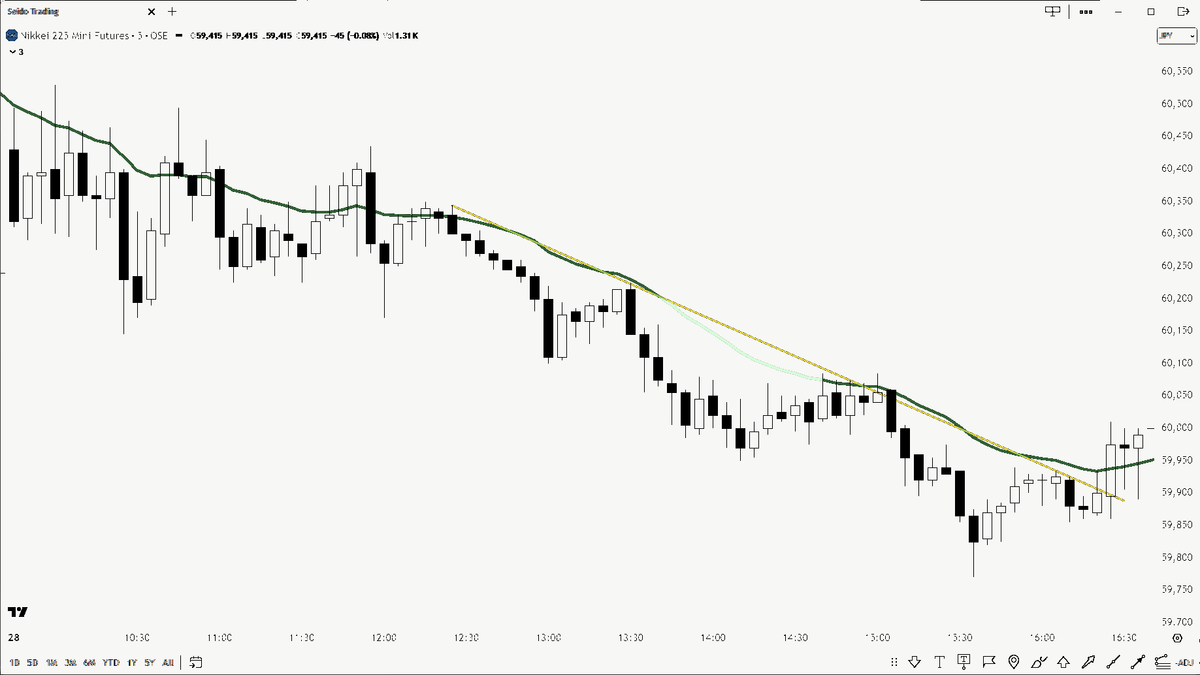
There are two common tools that assist in identifying trends: moving averages and trendlines. Neither is essential — there are traders who trade without them. Used correctly, they provide context. They support your read of price action. They do not replace it.
Both act as dynamic support and resistance zones. The word zones is important — it reflects how traders respond when price interacts around these levels, not just at the exact line.
Markets Tend to Continue
A general observation to carry forward: roughly 80% of breakout attempts fail within 5 bars on the highest timeframe the pattern is visible on. A breakout against the prevailing trend only succeeds approximately 20% of the time.
This has a direct implication for how to participate. Trading in the direction of the trend aligns you with the majority of price movement. Attempting to anticipate a counter-trend breakout puts the probabilities firmly against you.
In a bull trend, pullbacks to the EMA represent continuation behaviour — traders use them as opportunities to interact with the trend. Context determines everything. The same candle has a different meaning in a trend compared to a trading range.
What you will notice when looking at charts is that most trends are made up of regular bullish or bearish candles and trading range candles — not strong candles. A professional trader recognises the structure, the trend, and the context, and participates without needing a textbook candle.
Trendlines
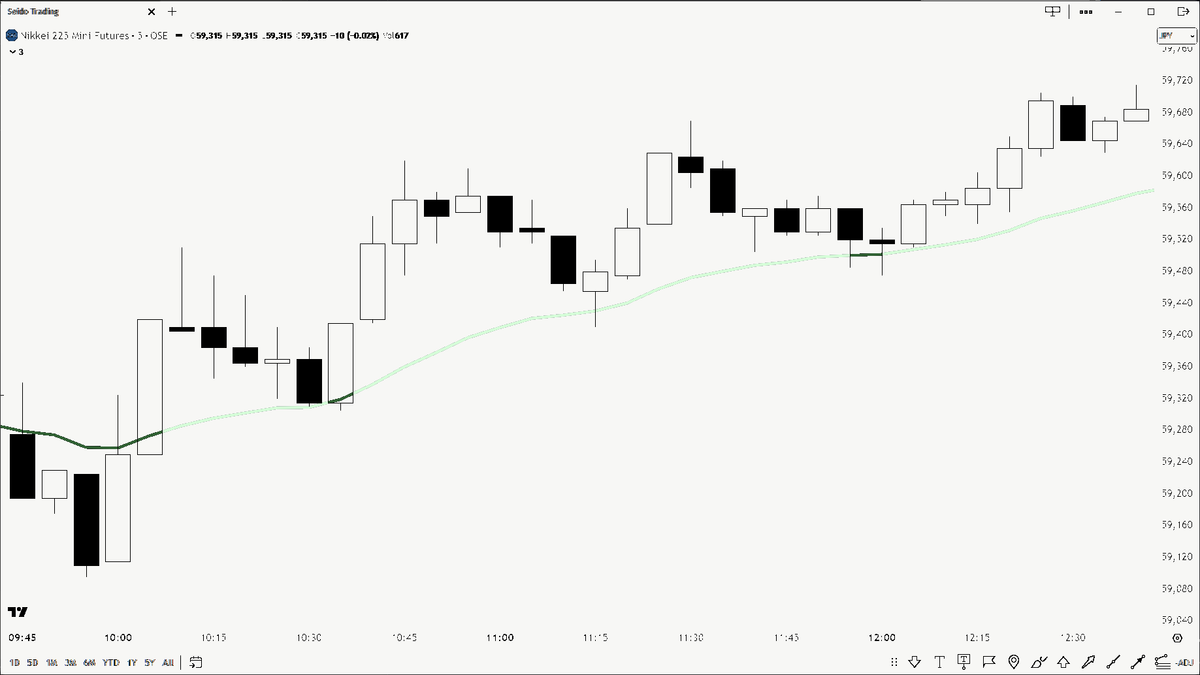
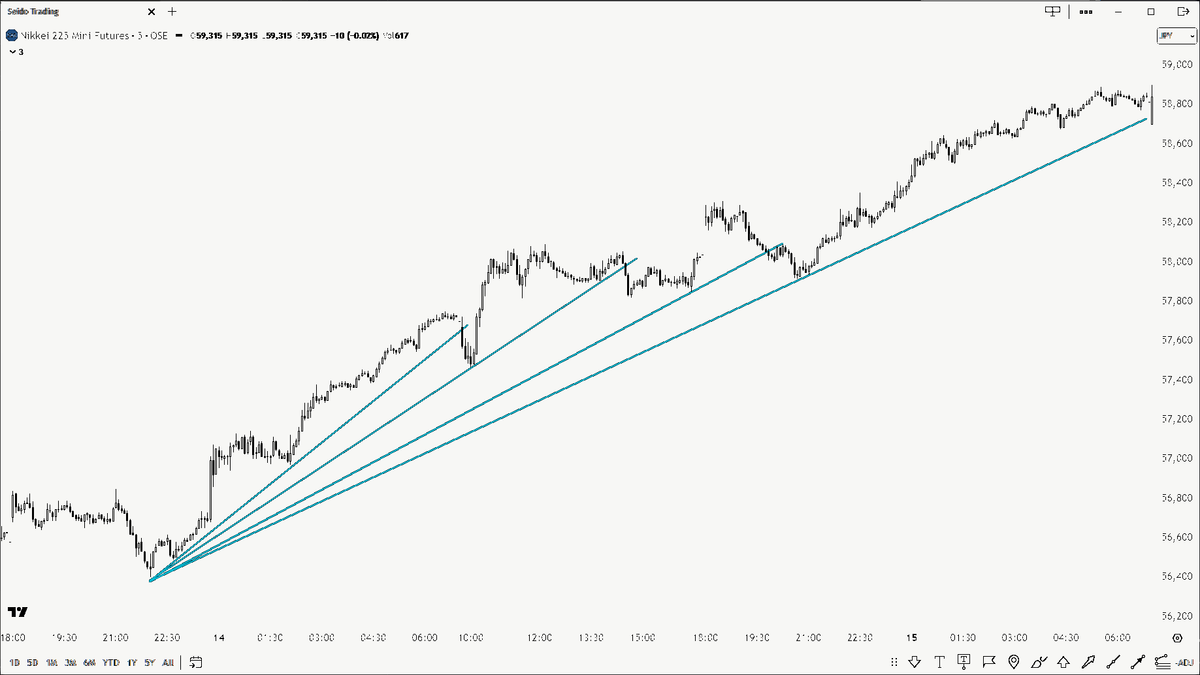
Major trendlines
Major trendlines connect clear swing highs or lows and are visible on higher-timeframe charts. These levels are widely watched — traders across many timeframes and algorithmic systems reference them as key support and resistance.
Minor trendlines
Minor trendlines are smaller, drawn within shorter price moves. They are useful for assisting your read of price action on a lower timeframe.
The evolving nature of trendlines
Trends evolve over time. As a trend progresses and eventually flattens, any trendline drawn at the start will need to be redrawn. Markets broadly move through phases — transitions happen gradually, not instantly.
You will notice that price frequently overshoots a trendline, yet the trend can remain intact — still producing higher highs and higher lows. Trendlines should be used as guides, not rigid rules.
Moving Averages
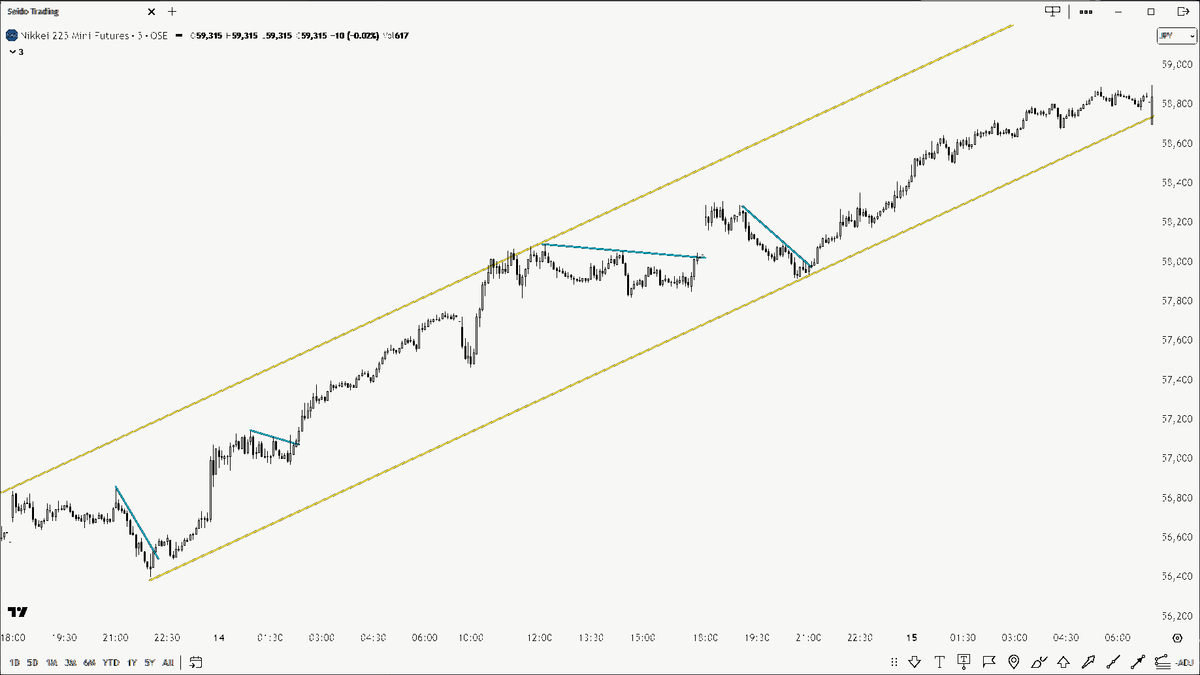
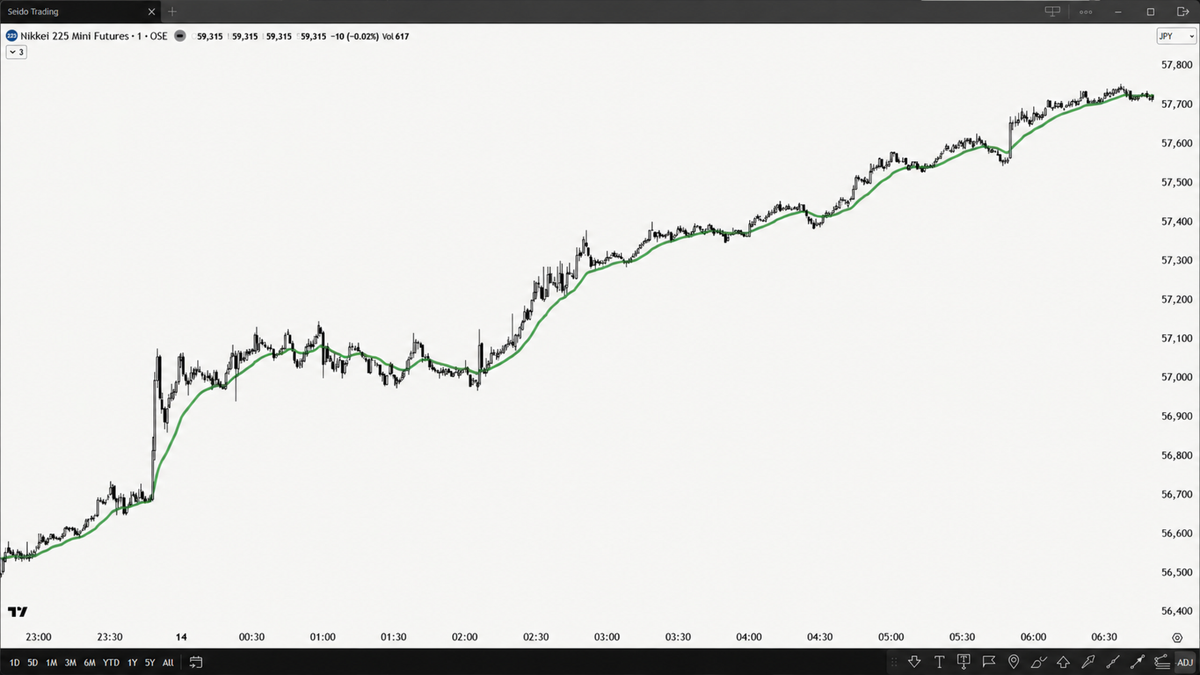
Moving averages work across all timeframes — from one-minute charts to daily, weekly, or monthly charts.
- Shorter-period EMAs (9/10): highlight strong momentum and short-term direction
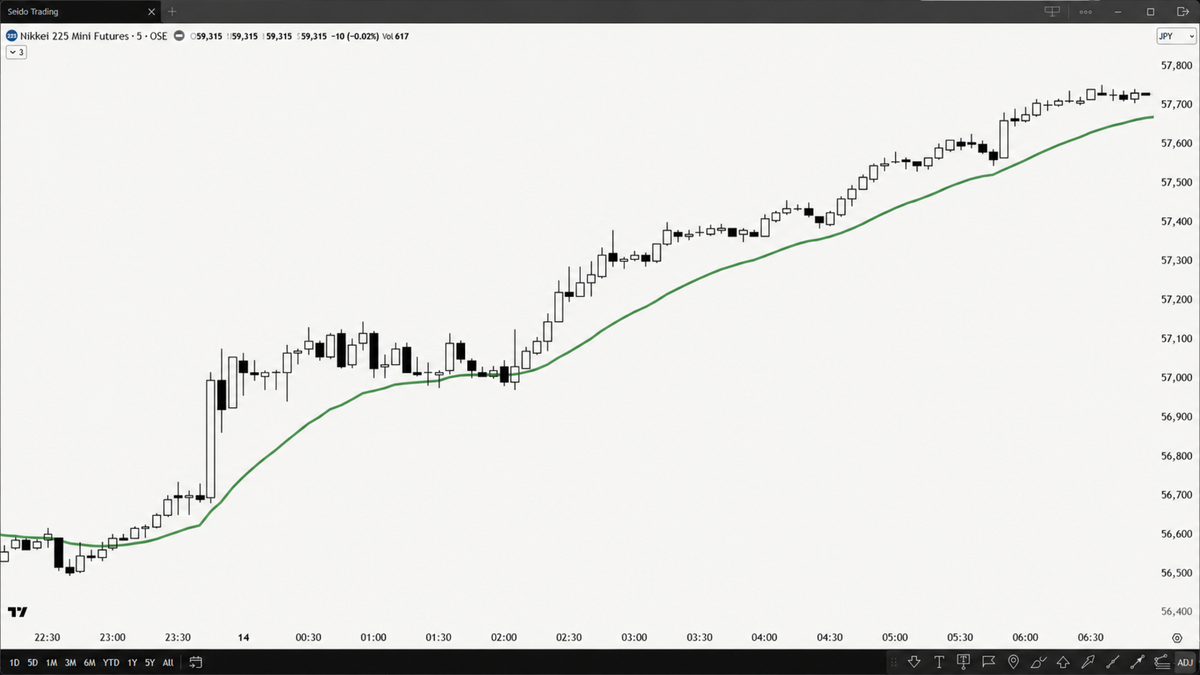
- Intermediate-period EMAs (20/50): define the broader trend
When momentum forms, price moves away from the EMA, reflecting relative bullish or bearish strength. All of the characteristics of momentum covered in Lesson 2 are relevant here.
The first pullback to the moving average after a momentum leg tends to produce the clearest and most reliable condition for traders.
Higher Timeframe Context on a Lower Timeframe Chart
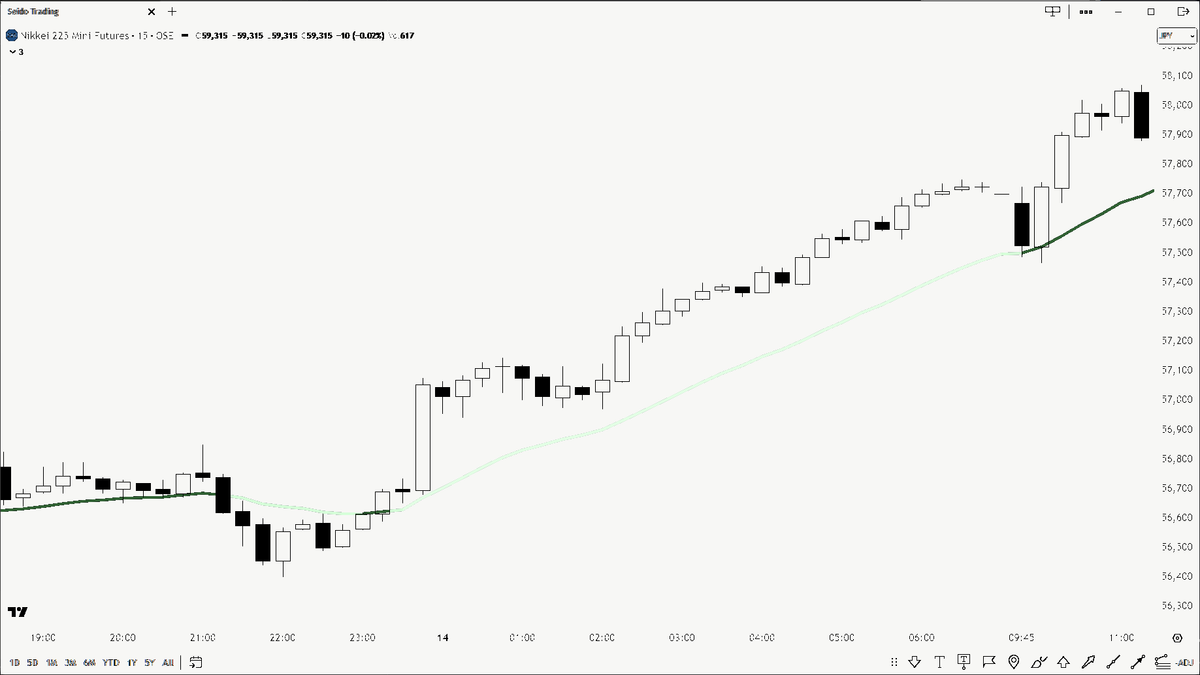
Good traders are always observing context. A trader on the daily chart looks to the weekly for context. A trader on a 5-minute chart may use a 15-minute, hourly, or daily chart for broader orientation.
An easy approach to higher timeframe context is to overlay a higher-timeframe moving average directly onto your lower-timeframe chart. By combining EMAs in this way, trend direction and structure become easier to read at a glance.
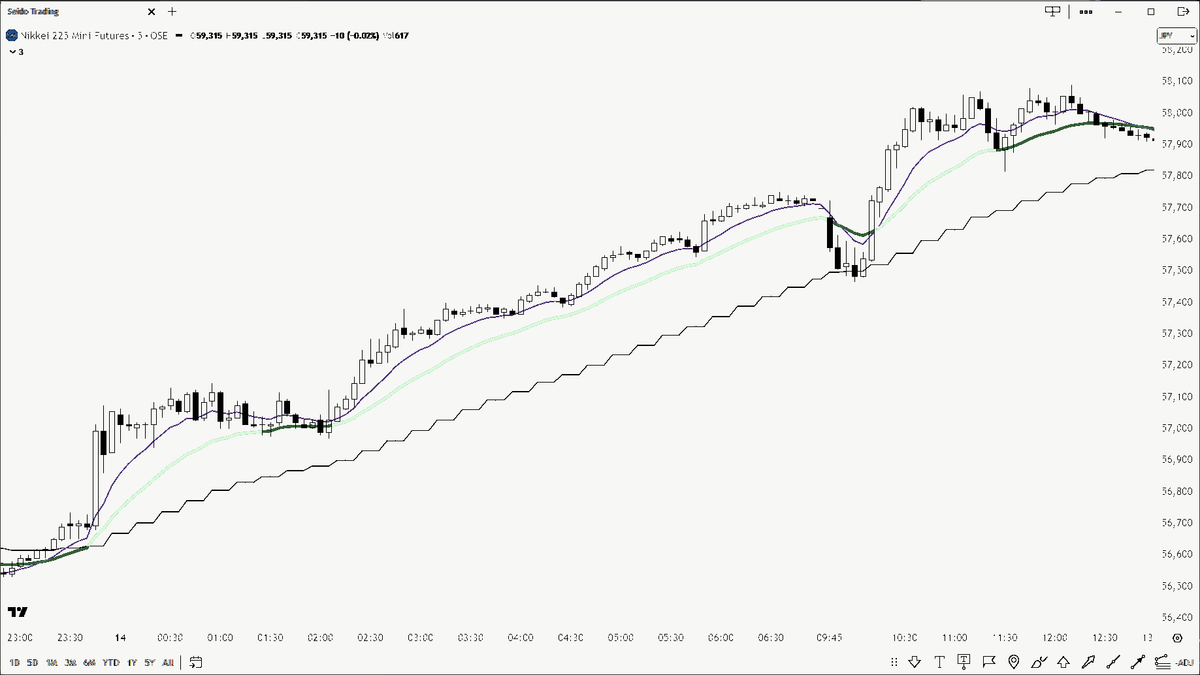
When Trend-Following Breaks Down
Moving averages and trendlines are trend-following tools. That means they only work when the market is trending.
In a tight trading range, price oscillates above and below the EMA without directional bias, producing unreliable signals. Do not apply trend-following tools within the context of a tight trading range — as discussed in Lesson 2.
Recognising momentum is what allows you to know when to apply these tools. Wait for momentum to emerge before relying on moving averages or trendlines to define structure.
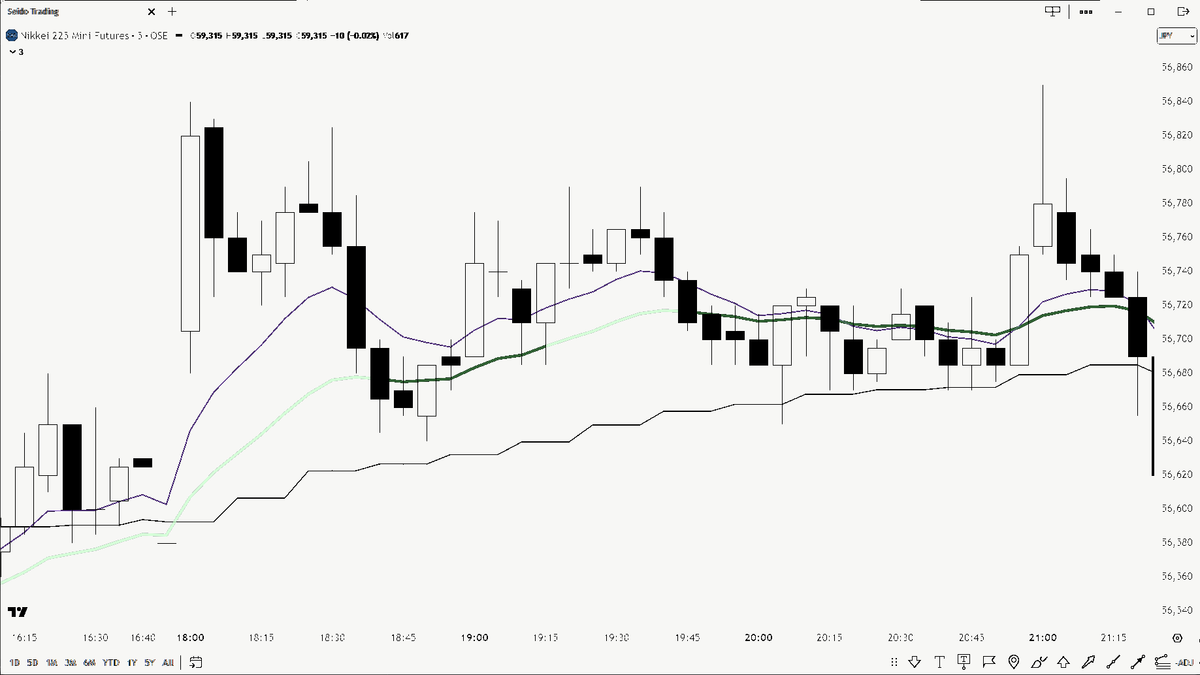
EMA Bounces
When strong momentum moves price away from the EMA and price then pulls back to retest it for the first time, that creates a defined setup with clear risk. Traders will look for as many of the momentum characteristics from Lesson 2 as possible — gaps, large strong candles, small wicks.
“Near enough is good enough” — price does not have to touch the EMA or any level in trading exactly to represent a valid interaction. The zone around the EMA matters, not the precise line.
EMAs can also indicate trend weakening. When significant price action forms below the moving average in a bull trend, it may indicate the trend is losing momentum. At that point, it is statistically less likely that price will revisit prior highs before testing the higher-timeframe moving average.
This does not automatically mean price will fall. Price can also trade sideways and wait for the HTF EMA to catch up before the trend resumes.
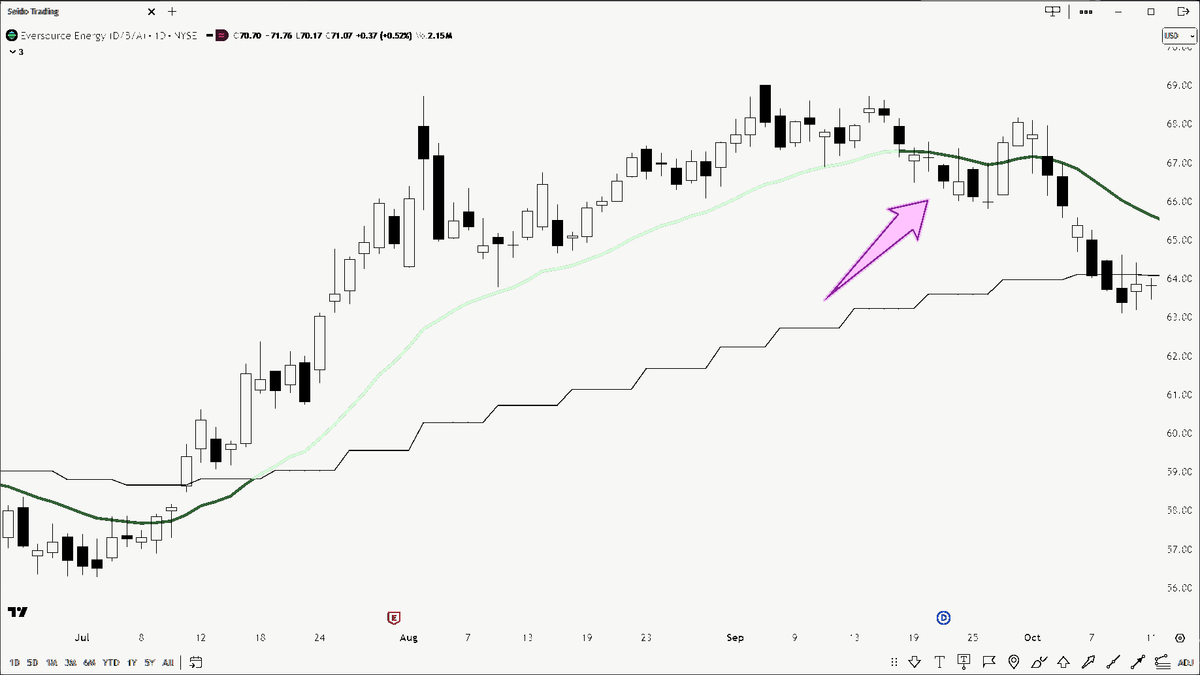
Reading EMA Behaviour Over Time
When price forms significant price action below the 20 EMA in a bull trend, it tends to eventually test the higher-timeframe moving average. Statistics do not guarantee outcomes — they allow more informed observations about the likelihood of future price movements.
When price eventually breaks through a moving average with strong momentum and then retests it cleanly, that retest creates a defined condition. This is why it is important to consider price action and context around the EMA, not just the fact that price crossed it.
The most straightforward participation in trending markets aligns with the trend. Professionals trade both directions — for most traders, it is simpler to identify the trend early and stay with it. Recognise the momentum, participate from a well-defined structural condition off a moving average interaction, and stay with the trend until the behaviour suggests it may be changing.
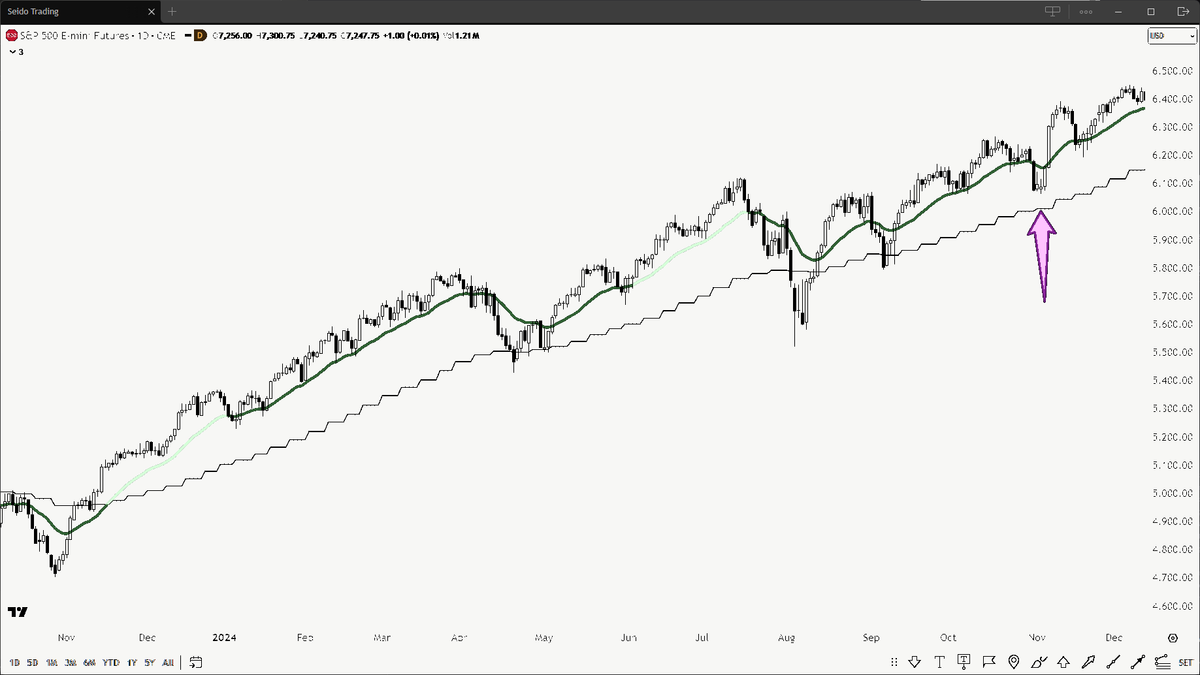
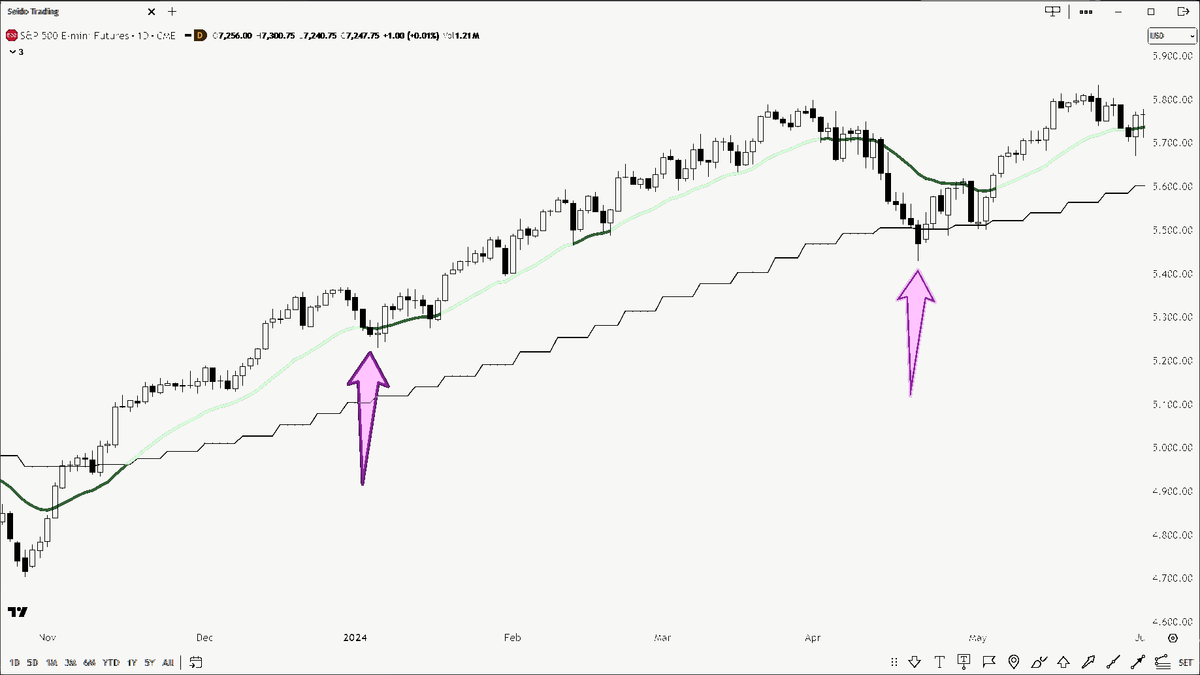
Reading Charts
Apply everything from this lesson to your read of price action moving forward. Work through the questions below before annotating your charts.
What to look for
- Where does price first establish momentum away from the EMA?
- How does the EMA behave during the first pullback after a momentum leg?
- What type of momentum is present — Type 1, 2, or 3?
- Are gaps present? What type?
- When price closes a weak candle at the EMA, what follows?
- How does the relationship between the 20 EMA and the HTF EMA evolve as the trend develops?
- When a trading range forms, how does price interact with the EMA differently?
What to take from this lesson
- A bull trend is higher swing highs and higher swing lows. A bear trend is lower swing highs and lower swing lows.
- Trends can exist on any timeframe. Context determines which trend is relevant to the trade being considered.
- Moving averages and trendlines provide trend context — they support your read of price action, not replace it.
- Roughly 80% of breakout attempts fail. Trading in the direction of the trend aligns you with the majority of price movement.
- The first pullback to the moving average after momentum tends to produce the clearest conditions.
- Trend-following tools are unreliable in tight trading ranges. Wait for momentum to emerge before applying them.
Coursework
Install the Seido HTF EMA on TradingView. Then pull up the ES futures on a daily chart with the weekly 20-period moving average overlaid.
Task
- Observe how price followed the EMA in the trend from late 2023
- Locate the first pullback after a strong momentum leg — observe how price reacted at the EMA
- Using your knowledge from Lesson 1, examine the candlesticks at the EMA: were they strong candles or trading range candles?
- Annotate as much of the chart as possible using everything from Lessons 1, 2, and 3
Observations to record
- When price broke out of a trading range, what happened when it pulled back to the EMA for the first time?
- When momentum appeared, which type was it — Type 1, 2, or 3?
- When significant price action formed below the EMA, did price eventually test the HTF EMA?
- Were there candles at the EMA that appeared strong but were followed by continued selling? What did they look like?
Go candle by candle. The effort applied here directly determines your ability to read price in the future.
Annotation Checklist
- Strong bullish candles
- Strong bearish candles
- Trading range candles
- Swing closes and interaction observations
- Significant gaps
- Shaved bar
- Momentum area — boxed or highlighted (green)
- Trading range area — boxed or highlighted (pink)
- Climax / exhaustion candles
- Major trendline — connecting swing highs or lows across a broad move
- Minor trendline — shorter-term move within the larger trend
- 20 EMA interaction — pullback, bounce, or break annotated
- HTF EMA interaction — price testing the higher-timeframe moving average
- First EMA pullback — after a momentum leg, marked distinctly