Candlesticks communicate information about price through four values: the open, the high, the low, and the close. This lesson covers what each of those values reveals about trader behaviour — and how to read that behaviour in context.
The Importance of the Close
Of everything a candlestick chart shows, the close is the most important component. Traders backtest strategies and make decisions based on the close — it is one of the most significant price levels to observe.
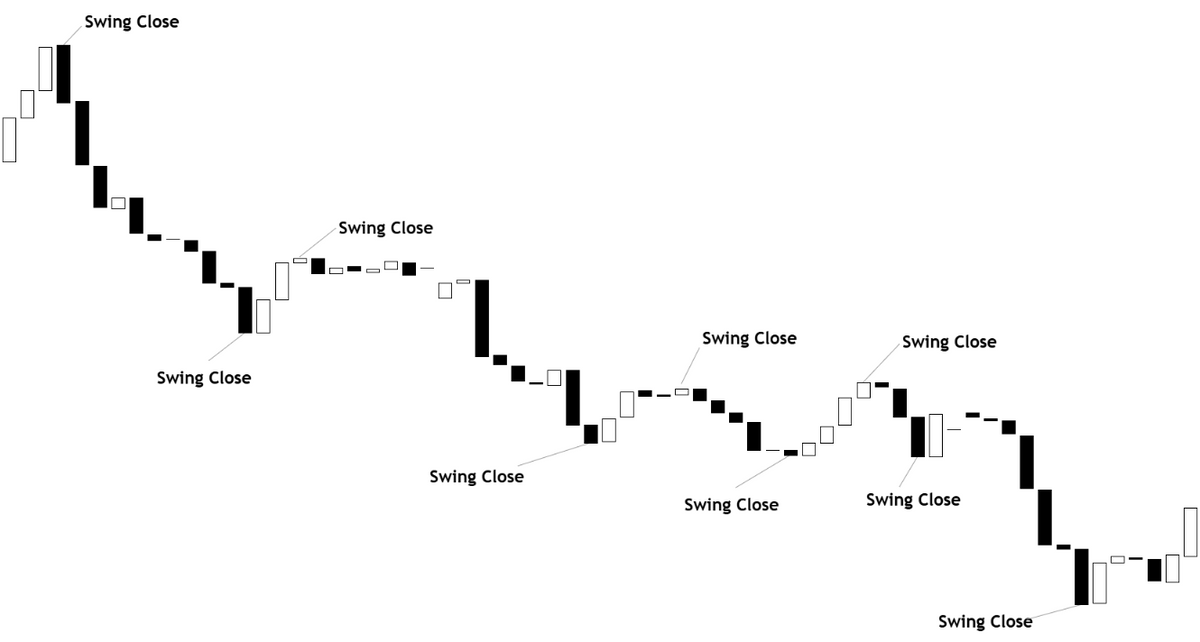
We observe not just individual candle closes but swing closes — how high or how low the market closed at key swing points. At a low close, observe how price responds when it returns to that area: does it push through with strong candles, or does it pull back into the prior range? At a swing high close, observe what happens when price interacts with that close, and how it responds.
These reactions provide observations about the likely direction of price.
Wicks
Wicks as extremes of price
Wicks mark the extreme of price within a candle. When price returns to the area of a prior high or low created by a wick, observe whether it pushes through or pulls back. They serve as reference points going forward.
Wicks are also useful when placing stops. Traders place stops past the extreme of a swing point — beyond the wick — to avoid being stopped out by normal price movement.
Wicks and how traders enter and exit positions
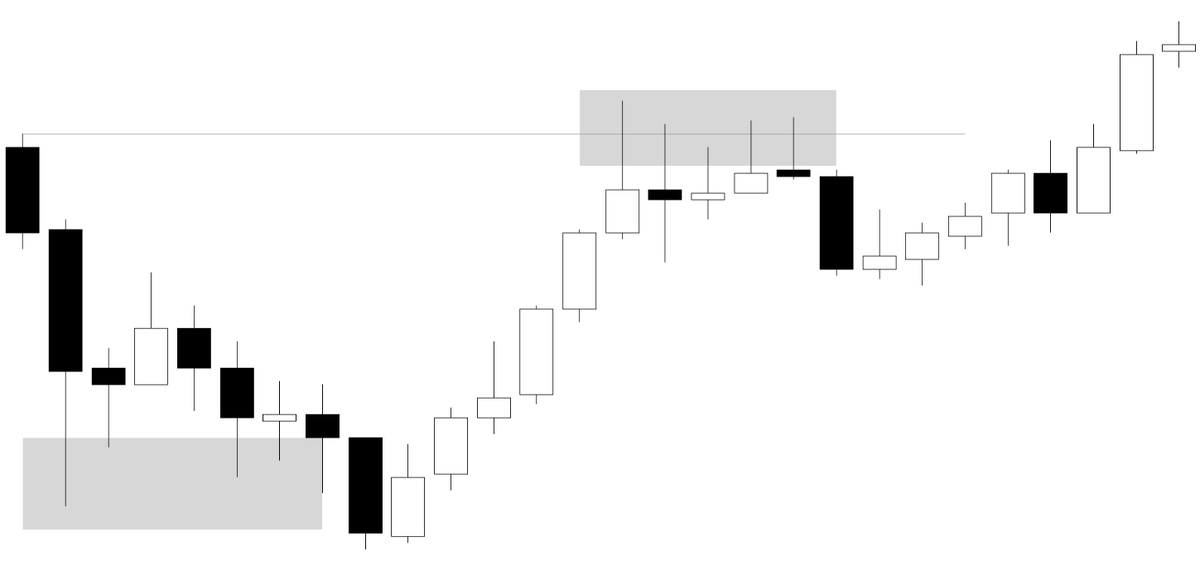
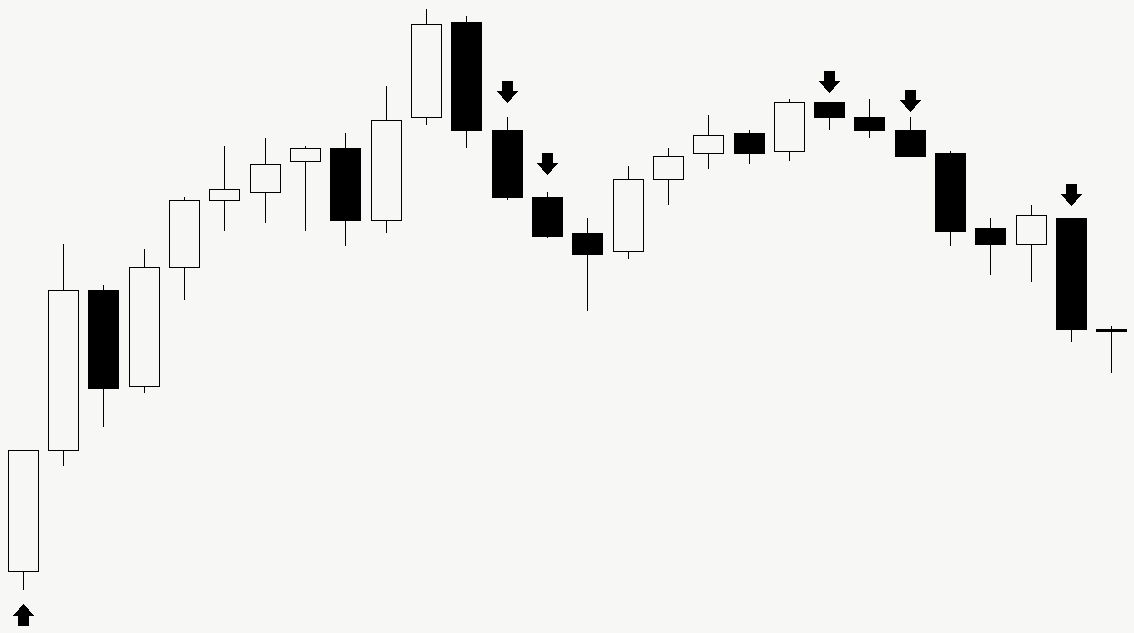
Wicks can tell us how bulls and bears are getting into or out of positions. When a series of lower wicks forms and price does not close below them, it may be a sign bulls are buying aggressively at those lows. A large lower wick on a bullish candle shows that all of those lower prices were bought — sellers were not able to hold price down.
As price moves higher, the character of the wicks changes. Longer upper wicks begin to appear where selling is occurring. Traders who bought lower are potentially starting to take profits. The candles themselves begin to look like trading range candles.
Gaps
Gaps are the clearest indication of momentum in the market. Roughly 80% of all bars on a chart are trading range bars or overlapping bars. When gaps appear, they stand out as a clear sign of directional momentum.
There are three types of gaps that price action traders observe.
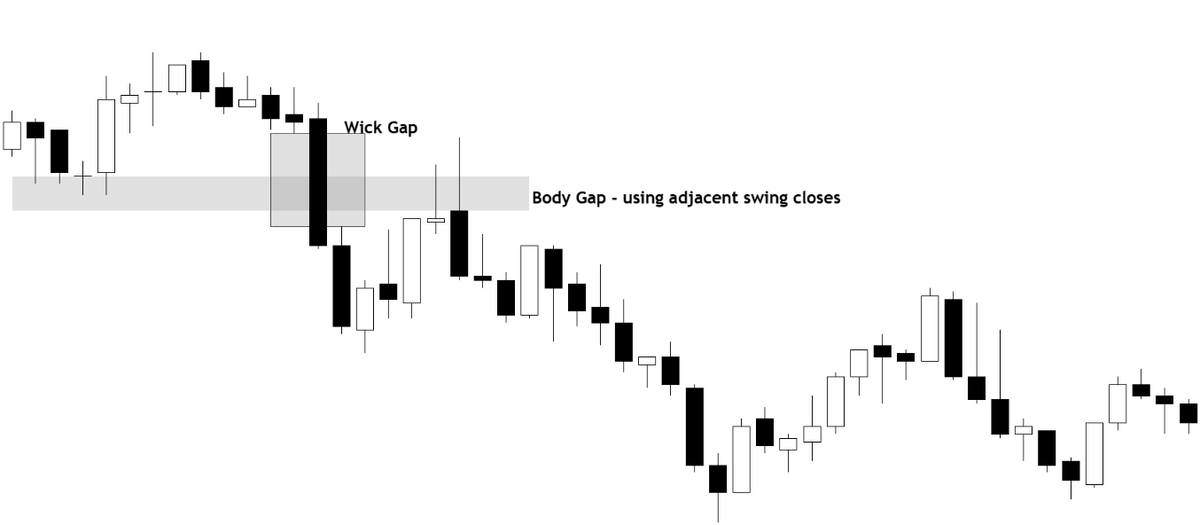
Wick gaps
Wick gaps require a three-bar pattern.
- In the bullish case, there is a gap between the high of bar 1 and the low of bar 3.
- In the bearish case, there is a gap between the low of bar 1 and the high of bar 3.
Body gaps
Rather than using the wicks to form the gaps, body gaps use the open and close of adjacent swing highs and lows.
When gaps form on both individual candles and across swing points, it reflects strong directional momentum.
Most price action contains trading range behaviour. When it does not, traders should pay attention.
Opening gaps — Buy the Close / Sell the Close
The third type of gap refers to the opening price of the following candlestick relative to the close of the prior one. When the open of the next bar is above the prior close, buyers were willing to pay a higher price to get in — this is a buy-the-close (BTC) gap. When the open is below the prior close, sellers pushed price lower on the open — a sell-the-close (STC) gap.
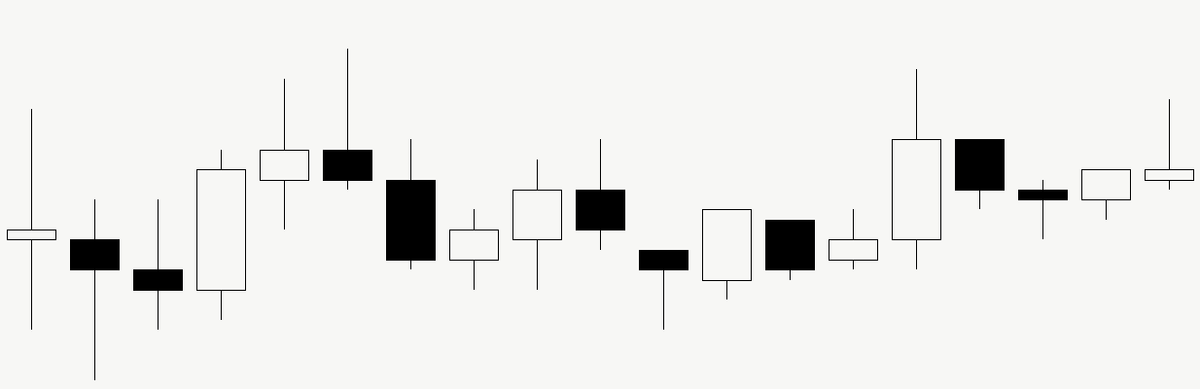
Tight Trading Ranges
Markets tend to continue doing what they have been doing. A general observation to carry forward: roughly 80% of breakouts fail.
Tight trading ranges can be difficult for developing traders to navigate. The characteristics of a trading range include:
- A high proportion of trading range bars with large wicks on both top and bottom, giving no clear indication of direction
- Strong bars may appear, but there is no follow-through — a strong bullish bar is immediately followed by a trading range bar, or a strong bearish bar is followed by a trading range bar
- Gaps are either absent or close quickly
- A high proportion of overlapping bars
When price behaves this way, it is not providing the momentum that is easier to trade for beginners. This does not mean this price action cannot be traded. It means that for developing traders, it is not the straightforward opportunity. Cleaner, more directional price action tends to produce clearer conditions while you are still learning.
Three Types of Momentum
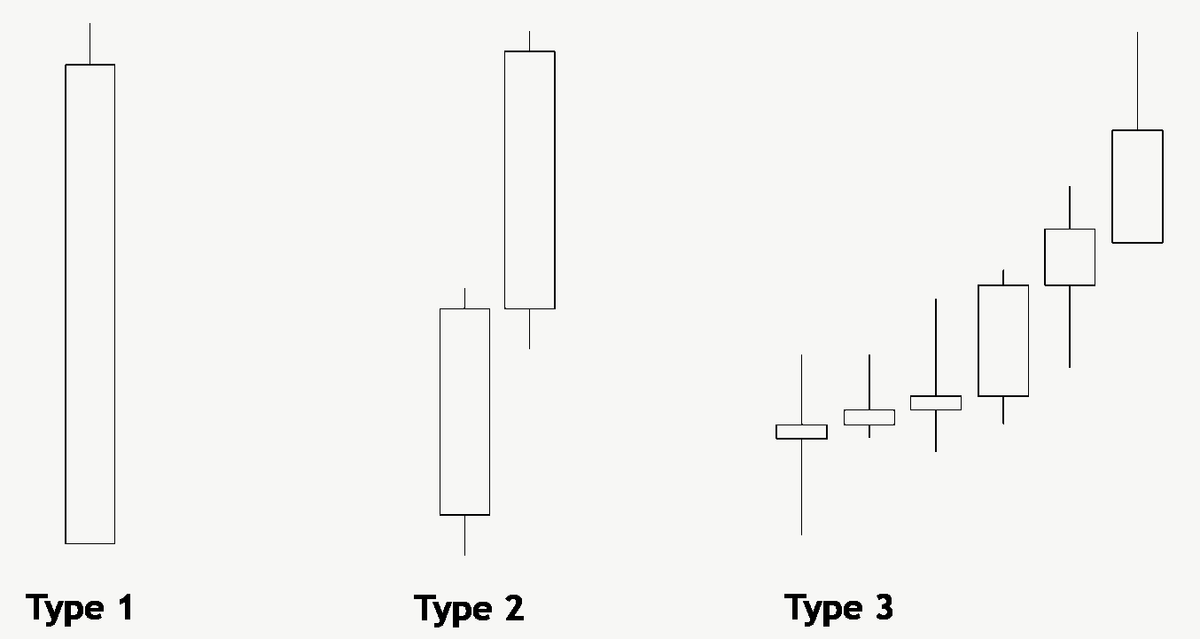
There are three ways momentum appears in the market.
Type 1 — A single large strong candle
A single candle that is significantly larger than the surrounding bars and closes strongly in the top or bottom 30% of its range.
Type 2 — At least two consecutive strong candles in the same direction
Two or more consecutive strong bullish or bearish candles. This is why establishing a clear definition of what a strong candle is — as covered in Lesson 1 — matters.
Type 3 — A series of directional candles
A series of bullish or bearish candles that move steadily in one direction. Individually, you may not see strong candles or gaps. But from a higher-timeframe perspective, this type of momentum would still appear as either consecutive strong candles or a single large strong candle.
Momentum provides some of the clearest opportunities in the market. Understanding these three types forms the foundation for how we observe and respond to price going forward.
When to be Cautious of Momentum
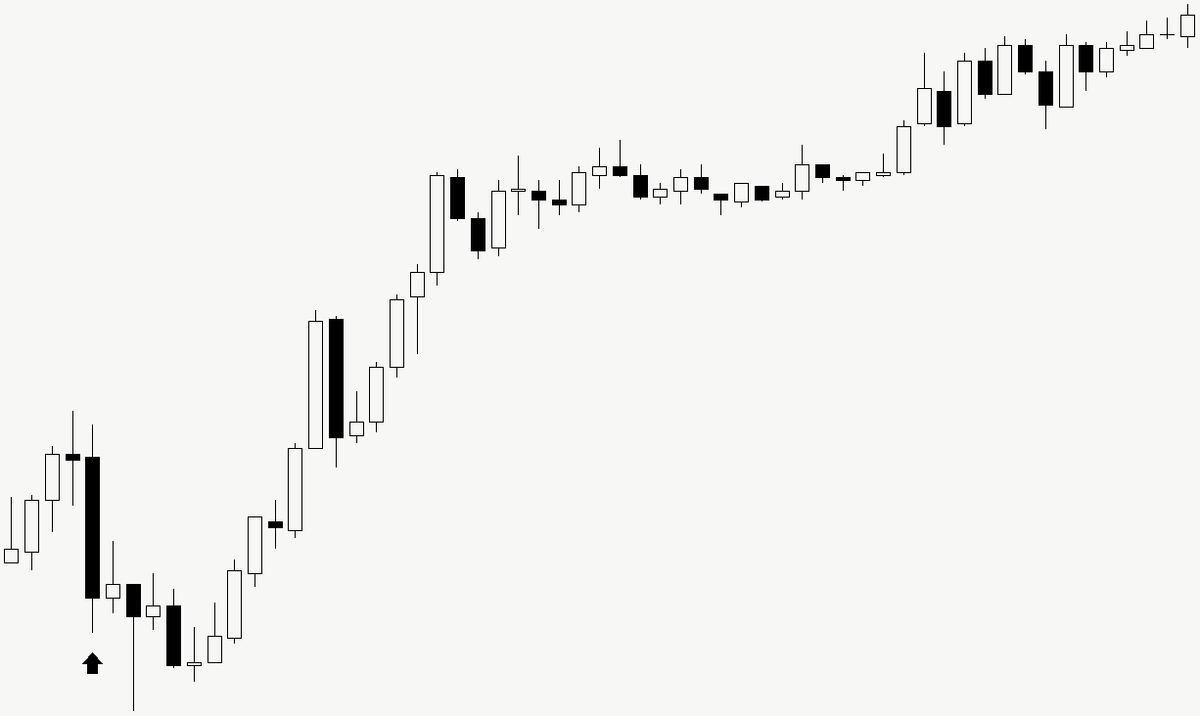
Momentum at the open
If you are trading intraday, you will often see a large strong candle or signs of momentum at the open. Momentum at or near the open does not produce reliable directional strength. Strong candles and directional movement near or at the open often reverse.
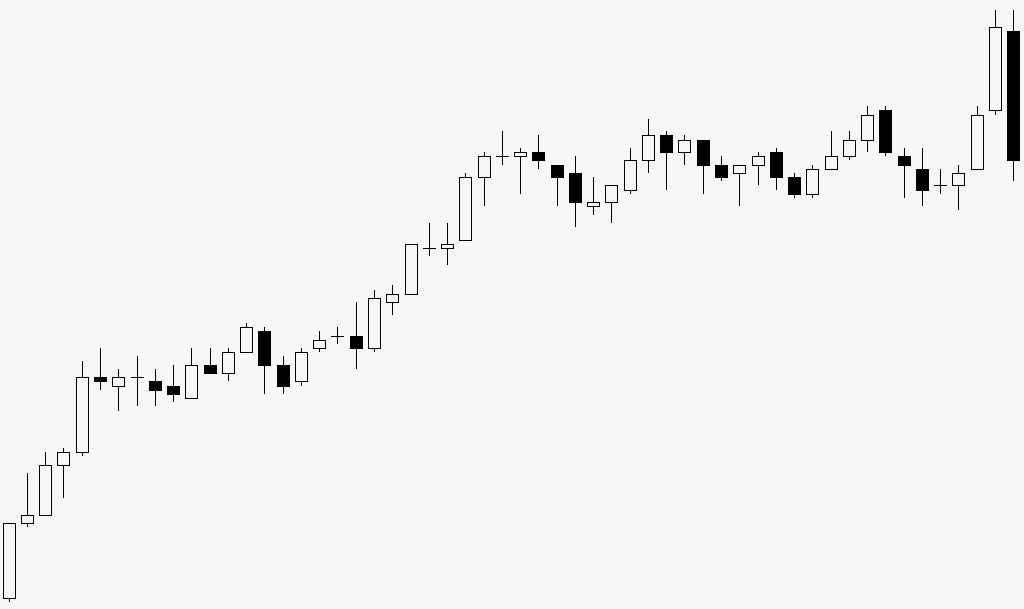
Momentum late in a trend
The other time to be cautious of momentum is late in a trend. When the largest candle of the day forms at least 10 to 20 bars into a move, it can indicate the end of the trend. Traders refer to these as exhaustion or climax candles. Climactic momentum does not necessarily mean reversal — price may transition into consolidation, either sideways or as a pullback.
Consecutive Candles and Reluctance
When six or more candles form consecutively without a pullback:
- Bear trend: each high is lower than the high of the prior bar
- Bull trend: each low is higher than the low of the prior bar
This creates reluctance among opposing traders to take counter-trend trades.
In a bearish example with 12 consecutive candles where each high is lower than the prior bar, bullish traders will often wait for a second attempt to reverse prices higher. Even if a strong bullish candle appears, they may hold off. It is when a second bullish candle forms — a second attempt to push prices higher — that bullish traders gain confidence and participate.
Reading Where Institutions Are Active
There are hundreds of institutions trading every market around the world, all using algorithms. Algorithms have advantages in speed of execution and position in the order queue. As retail participants, matching that speed is difficult — but we can read what they are doing.
By observing candlesticks — the open, high, low, and close — and seeing how price interacts with prior candles, we can identify where institutions are active. Institutions will buy and sell at all levels of a prior candle:
- Below the prior candle
- At the high of the prior candle
- In the middle of a candle
- At the open of the prior candle, which can create a gap
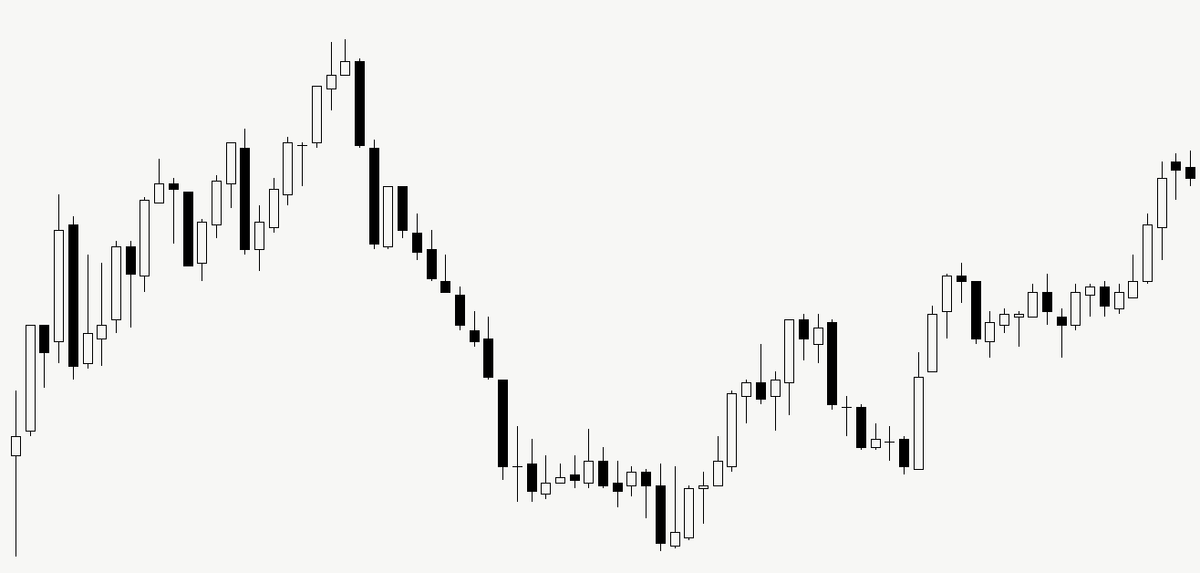
It is important not only to identify where institutions are buying or selling, but also to consider why. (For example Fig. 2 They were selling the high of the trading range initially) Why are institutions buying below a candle? Why is this gap forming? Why are they selling at the high? The answers to these questions are found in the surrounding price structure — context that is built throughout this series.
Chart Walkthroughs
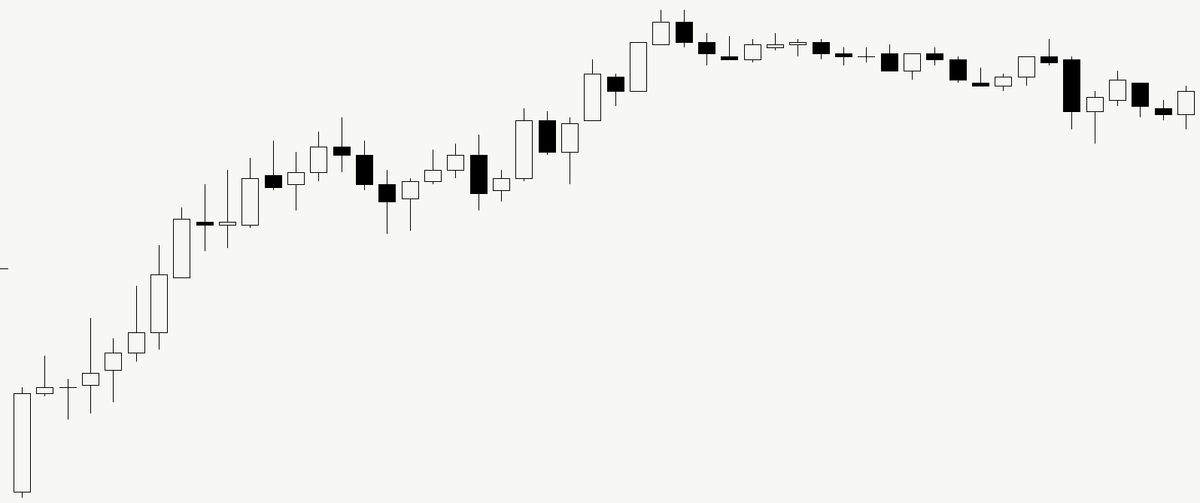
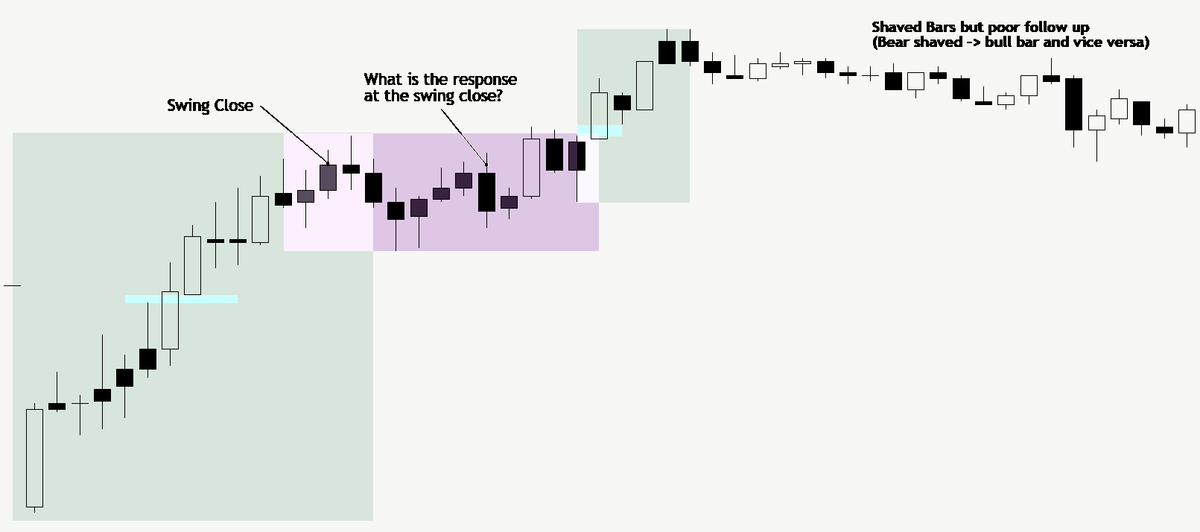
When reading charts, apply everything covered in this lesson to the price action. For each chart, work through the questions below as prompts and ask any additional questions that help you read the details we have covered.
What to look for
- Identify areas of momentum and areas of trading range
- Observe how candles form around high and low closes
- Where are gaps forming? What type are they?
- How did traders respond to the first strong bullish bar?
- What happened when price traded through the low close the first time? The second time?
- How did price transition from momentum to a trading range — more signals of momentum, or fewer?
What to take from this lesson
- The close is the most important component of a candlestick. Observe swing closes — not just individual candle closes.
- Wicks mark the extremes of price. How price behaves when it returns to a prior wick tells you about the conviction of the traders who pushed to that level.
- Shaved bars show eagerness. A shaved top and bottom means participants were willing to buy or sell from the open all the way into the close.
- Gaps are the clearest indication of momentum. There are three types: wick gaps, body gaps, and opening (BTC/STC) gaps.
- There are three types of momentum: a single large strong candle, two or more consecutive strong candles, or a series of directional candles.
- Be cautious of momentum at the open and momentum that forms very late in a trend — both can reverse or consolidate.
Coursework
Pull up your chart and annotate at least two full intraday sessions on a 5-min chart using the checklist above. Apply everything covered in this lesson.
Suggestion: NK225M futures on TradingView, set to “Day Session”.
Task
- Mark areas of momentum and areas of trading range
- Label all swing high and low closes
- Identify and annotate any gaps — note the type for each
- Annotate any shaved bars
- Identify the three types of momentum where they appear
- Note any momentum at the open or climax candles late in a trend
Observations to record
- When momentum appears, which type is it most often — Type 1, 2, or 3?
- When price transitions from a trading range into momentum, what changes in the candles?
- Are gaps present during momentum? What type?
- When a climax candle appears, what follows — reversal or consolidation?
The more effort you put into reading price at this stage, the easier it will be in later lessons.
Annotation Checklist
- Strong bullish candles
- Strong bearish candles
- Trading range candles
- Swing high close — labelled at key swing points
- Swing low close — labelled at key swing points
- Wick gap — three-bar pattern, annotated between relevant bars
- Body gap — between open of one swing and close of prior swing
- Opening gap (BTC/STC) — open of next bar vs close of prior bar
- Shaved bar — no upper wick (shaved top), no lower wick (shaved bottom), or both
- Momentum area — boxed or highlighted (green)
- Trading range area — boxed or highlighted (pink)
- Climax / exhaustion candle — large strong candle late in trend, annotated