Context in price action means the price action on a higher timeframe. Every principle covered so far — candlestick behaviour, momentum, trends and consolidation — exists on every timeframe. Reading those principles on a higher timeframe before looking at an entry is what builds context.
Why Context Comes First
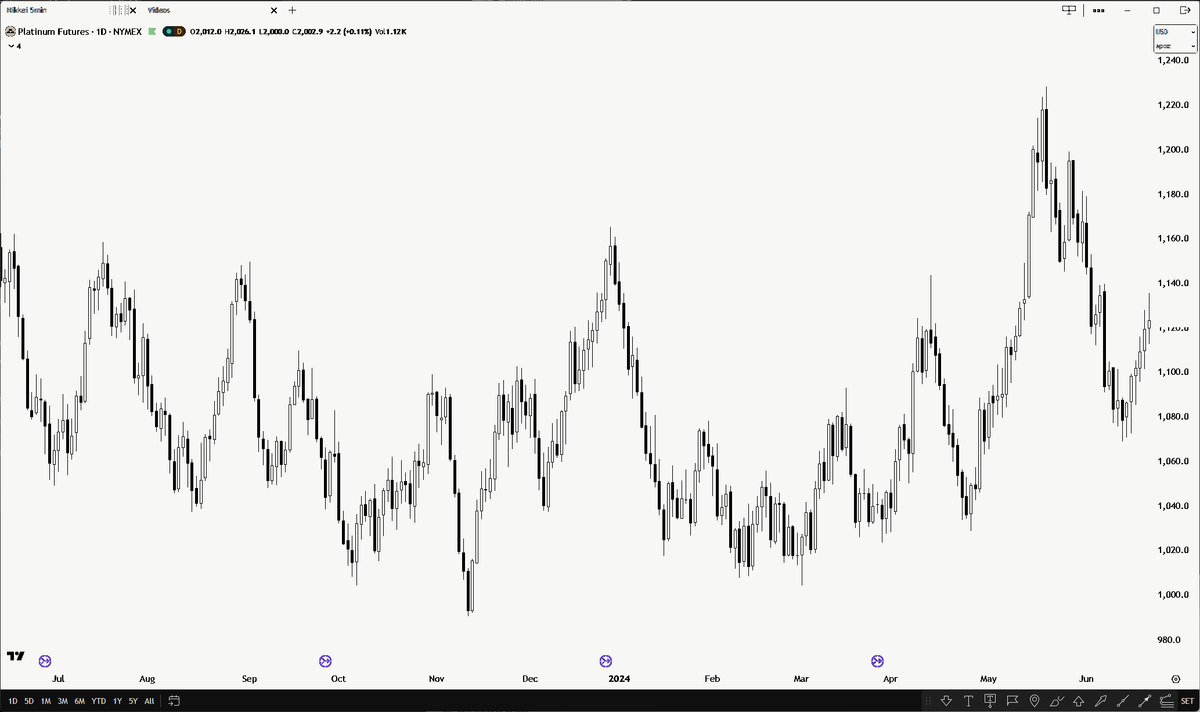
The highest timeframe a pattern is visible on determines how long it takes to play out. A trading range on the daily chart can take days to resolve. If a pattern looks large or confusing on the current chart, the higher timeframe will give the perspective needed to make an informed decision.
One important rule: price can fail a breakout attempt of a trading range, trend or level within 5 bars on the highest timeframe that structure is visible on.
A valid signal on the execution timeframe can still be a low-probability trade depending on where it sits within the HTF picture. This is why the HTF is checked first.
Choosing Your Higher Timeframe
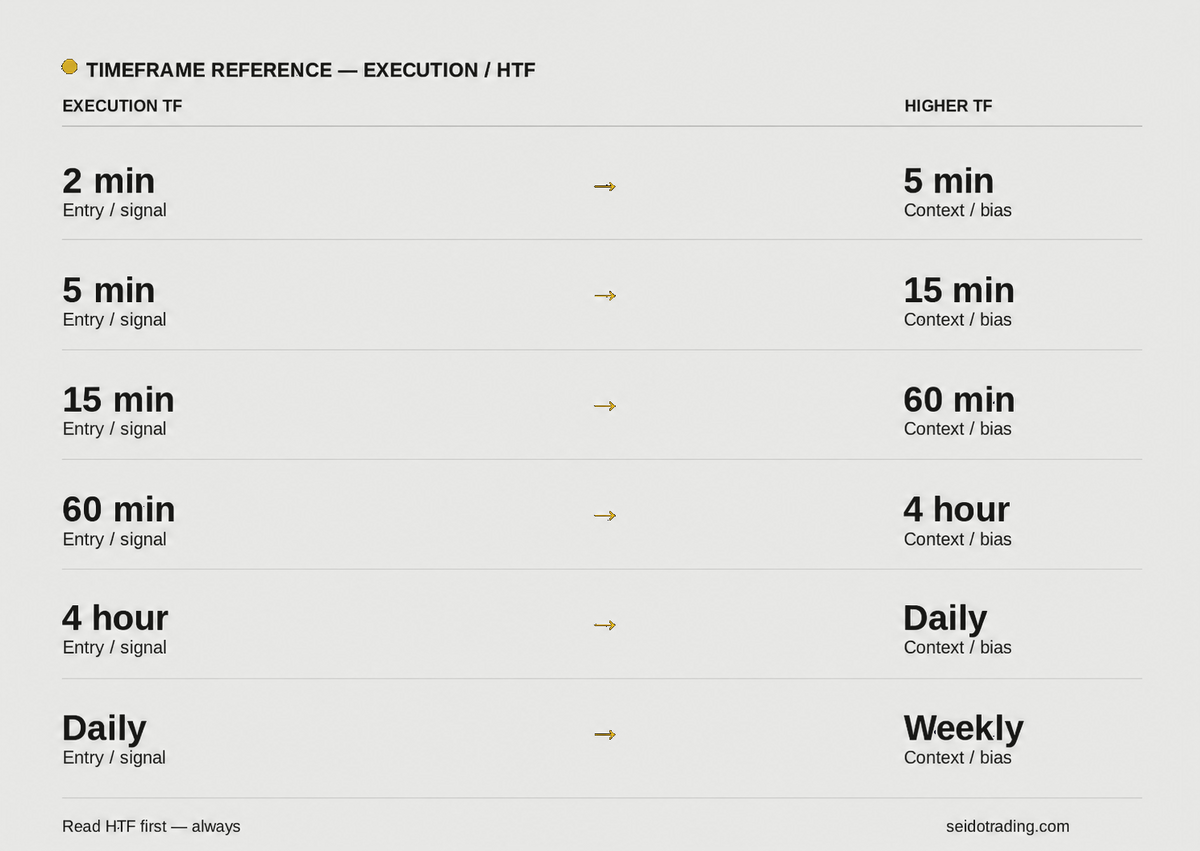
Contextual awareness takes time to develop. When starting out, one HTF is enough. More than one can produce what appear to be conflicting signals — and as covered in Lesson 4, hesitation leads to inconsistency. One HTF gives a clean, usable read.
What to look for on that HTF is the same as what has been covered from Lesson 1 onwards — momentum, consolidation and trading range price action. The fundamentals do not change at the higher timeframe. Only the scale does.
The chosen timeframe also needs to match capacity to act. Lower timeframes produce more signals but require faster decisions. If signals cannot be acted on in time, the timeframe is too fast and a slower one will produce better results.
How to Read the HTF
Traders who completed the Lesson 5 coursework have already been doing this — observing consolidation patterns from a higher timeframe perspective is HTF context building. The habit is the same. The questions to ask every time are:
- Is there a trend or a trading range?
- Where within it — early or late in a trend, high or low in a range?
- What are the candles showing at this level right now?
- Is momentum strong or weak?
Answering these questions before looking at the execution timeframe helps turn context into a repeatable habit rather than a reactive judgement.
The HTF EMA Tool
The HTF EMA indicator for TradingView overlays the higher timeframe bias directly on the execution chart, without needing to switch timeframes. Price above the HTF EMA signals a long bias. Price below signals a short bias. It is a simple filter for keeping execution aligned with the HTF picture.
HTF Candles and What They Represent
A single trading range candle on the HTF represents a full trading range or consolidation on a lower timeframe. The structure is the same at both scales — price trading in a range.
HTF structures carry more weight than their lower timeframe equivalents because they accumulate more participants over a longer period. The behaviour of price around the highs and lows of HTF candles reflects decisions made by a much larger group of traders. This is why those levels attract the reactions they do.
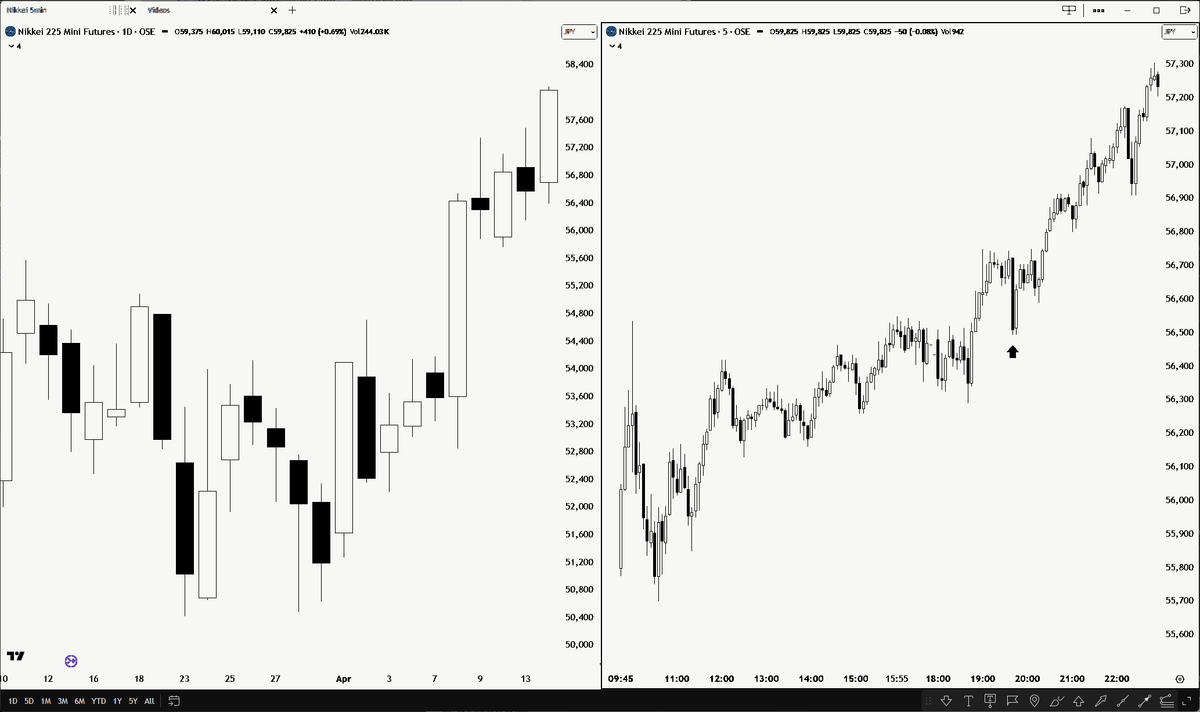
After a strong HTF momentum candle, the bias is established. The HTF has already shown traders the direction a move is more likely — traders will look for trades in that direction on the execution timeframe.
Calibrating Expectations
Not every trade carries the same potential. HTF context is what determines the expectation for a given setup.
A trade taken in the middle of a HTF range — where price could move in either direction — is a base hit. Managed well, it builds the account steadily. A trade taken within the context of a strong HTF setup is a potential home run. The HTF picture is what makes that distinction clear before the trade is placed.
Consistently taking base hits is a skill in itself. It requires discipline and an honest read of where price sits in the HTF structure. Traders who do this well stay in the game long enough to recognise when the conditions for a larger trade are genuinely present.
What to remember from this lesson
- Context in price action means the price action on a higher timeframe — and should be assessed before looking for an entry on the execution timeframe.
- The highest timeframe a pattern is visible on determines how long it takes to play out. Price can fail a breakout within 5 bars on the highest timeframe that structure is visible on.
- When starting out, traders should use one HTF only. Multiple timeframes can appear to give conflicting signals and create hesitation.
- Every HTF read asks the same questions: trend or range, early or late, candle strength, momentum.
- HTF context traded directionally on the LTF gives traders the best opportunity for home run trades.
- A valid signal on the execution timeframe can be a low-probability trade if the HTF context is unfavourable.
Annotation Checklist
- Strong bullish and bearish candles
- Swing closes and interaction observations
- Significant gaps within momentum areas
- Shaved bars
- Momentum area
- Trading range area
- Climax / exhaustion candles
- Trendlines (only where clearly defined)
- 20 EMA and HTF EMA interactions
- First EMA pullback after a momentum leg
- Consolidation range
- Momentum out of the trading ranges
- Retest levels
- Late-trend consolidation
Coursework
Your coursework is to continue marking up your charts — assessing individual candlesticks, trading ranges, and momentum with the higher timeframe perspective in mind.
- Find a period on your HTF where momentum was clearly present. Drop to your execution timeframe and observe what happened. What did the candles look like? Was there consolidation before the move? Where did pullbacks occur, and how did price behave around trading range candles within those pullbacks?
- Find a period where the HTF showed a trading range, and observe how price behaved at its highs and lows on the lower timeframe. This is where the work from Lessons 3 and 5 starts to connect.
- The habit of marking up charts is what builds your read of price action over time.
- When ready, start adding HTF filters to your strategy document. Step 8 is the spot for HTF conditions that disqualify a setup — start with one clear condition and build from there.