A measured move is a method of projecting the potential size of a future price movement by measuring the distance of a past move. The concept is grounded in the observation that markets tend to move in repeatable patterns — and that past price movement provides a basis for estimating future targets.
Measured moves serve two purposes: for traders assessing a setup, a target helps determine whether there is enough room in the trade to justify the risk. For traders already in a position, it provides a mathematically defined exit level.
Measured moves are not a standalone tool. Context always informs the decision. When a measured move target and a trade setup align at the same point, that is signal confluence — and confluence adds statistical weight to the trade.
Three Types of Measured Move
This lesson covers three types of measured move:
- Trading range measured moves — projecting the height of a range above or below it.
- Single strong candlestick targets — projecting from the range or close of a specific candle.
- Leg one to leg two — using the height of the first leg to estimate the second.
Trading Range Measured Moves
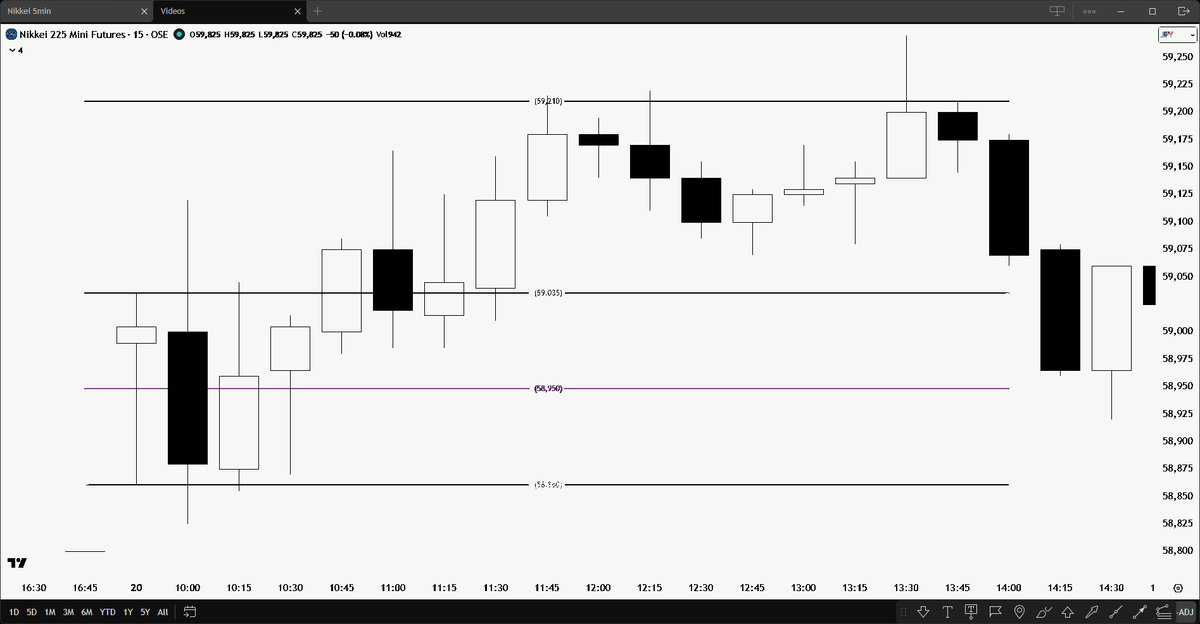
A trading range measured move takes the height of the range and projects it above or below the range itself. In TradingView, the Fibonacci retracement tool with the weak anchor setting applied is the most practical way to draw this.
The initial target for bulls is a measured move above the range. For bears, a measured move below. As covered in Lessons 5 and 6, every pullback after momentum is a trading range, and what appears as consolidation on an intraday chart is, in essence, a larger trading range. Measured moves apply to both in exactly the same way.
In strong trends, traders look beyond the first extension. Two or even three measured move extensions above or below a range become relevant when momentum is sustained. A measured move extension above a range represents a 1R trade for a trader whose stop sits below the prior pullback. Two extensions represents 2R.
Single Strong Candlestick Targets
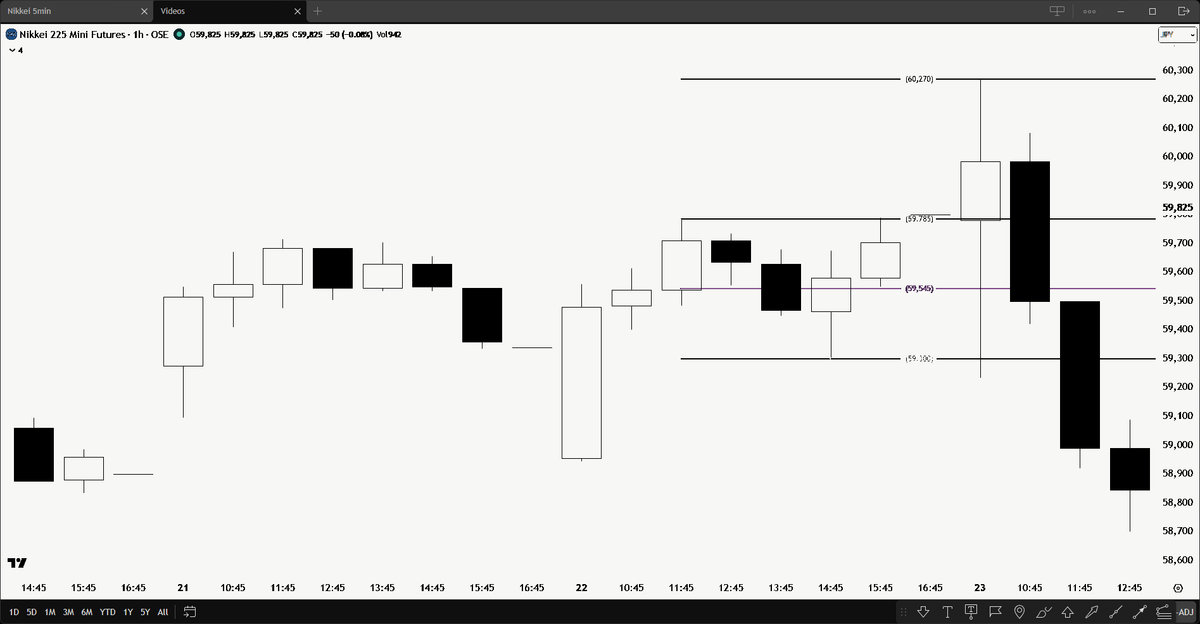
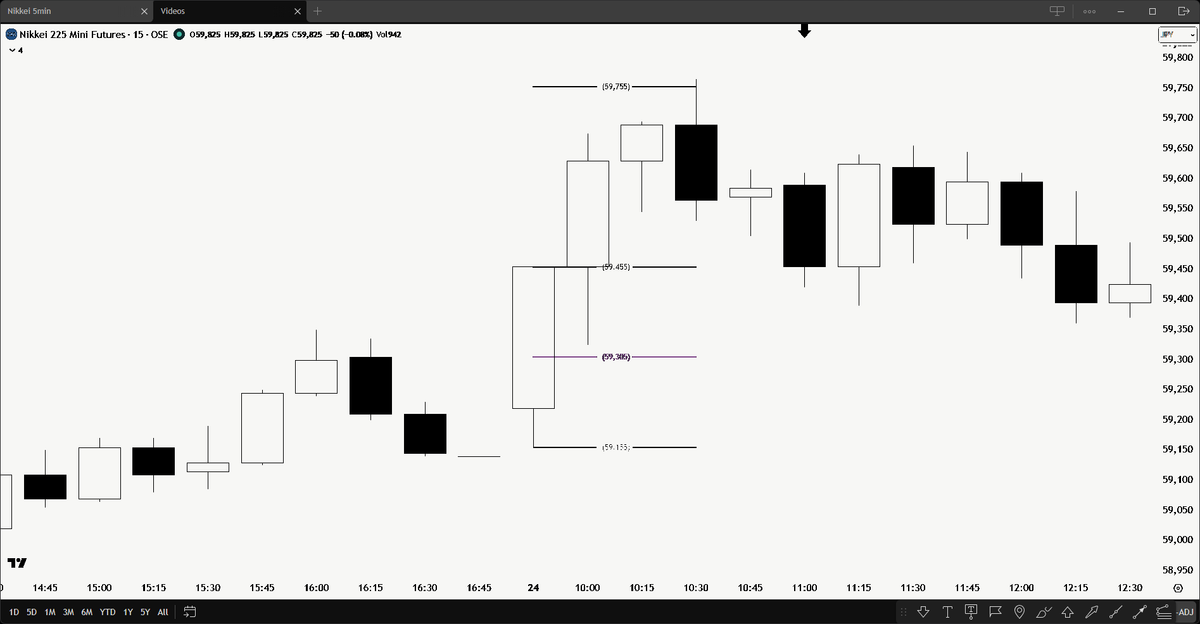
Strong candlestick measured moves apply the same principles to the individual candles from Lesson 1. The measurement differs depending on candle type:
- Trading range candle — the measurement is the full range from high to low, projected above or below.
- Strong bullish candle — the measurement is from the low to the close, projected above the candle.
- Strong bearish candle — the measurement is from the high to the close, projected below the candle.
Markets are fractal. A strong close on a 15-minute chart carries more weight than the same pattern on a 1-minute chart. The higher the timeframe, the more attention the measured move target attracts.
Confluence Across Methods
Measured move targets drawn using different methods will often align at the same level. A trading range extension and a single candlestick target, for example, may both land at the same price. This is not coincidence.
Measured move targets are mathematical projections that algorithms use for execution. As more algorithms reference the same levels, those levels become points of consensus and act as magnets for price. When multiple measured move targets align, the probability of a reaction at that level increases.
Leg One Leg Two Measured Moves
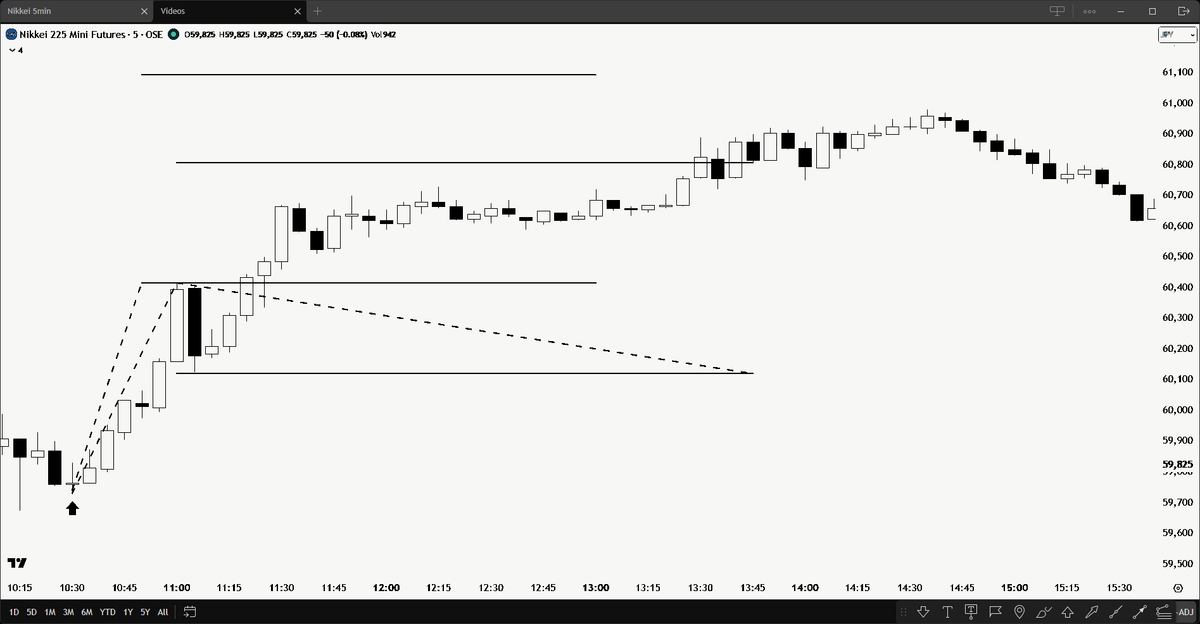
The final type uses the height of the first leg to project the expected size of the second. In TradingView, this is drawn with the trend-based Fibonacci extension tool.
These are less precise than trading range and single candlestick measured moves — leg two is often smaller or larger than leg one. They provide a useful reference for where a move may extend and where traders are likely to be taking profits, but should be treated as an approximate zone rather than precise targets.
There are two ways to draw them: including the retracement within the second leg, or projecting leg one without the retracement. Both approaches have merit and are worth testing across different markets and conditions.
Important Notes on Measured Moves
Measured moves are targets applied when traders are confident about the direction of a trade. They are not guarantees, and they do not remove the need to read price action or understand where the market is in its cycle.
How a measurement is drawn affects where the target lands. By its nature this is subjective — two traders may arrive at slightly different levels depending on their interpretation of price action and how they decide to measure the move. Consistency in method matters more than precision.
On strong momentum days, exiting at a measured move target can leave meaningful potential on the table. The work done in previous lessons — understanding higher timeframes, reading momentum, identifying the market cycle — is what allows traders to decide when to hold for a target and when to act earlier.
Traders must be able to calibrate their expectations for the outcome of a trade as the market evolves.
What to remember from this lesson
- A measured move projects a future price target based on a past price movement. When a measured move target and a trade setup align at the same level, that is confluence.
- Three types: trading range measured moves, single strong candlestick targets, and leg one to leg two projections. Trading range and single candlestick targets are the most precise.
- Trading range measured moves project the height of the range above or below it. Every pullback and consolidation is a trading range — the same method applies to all of them.
- Single strong candlesticks from Lesson 1 — targets use the close: low to close projected above for strong bullish candles, high to close projected below for strong bearish candles. Higher timeframe candles attract more attention.
- Measured move targets are mathematical projections referenced by algorithms. When multiple targets align at the same level, that level carries greater weight.
- Measured moves are not guarantees. How the measurement is drawn is subjective. Context and the market cycle determine when to hold for a target and when to act earlier.
Annotation Checklist
- Strong bullish and bearish candles
- Swing closes and interaction observations
- Significant gaps within momentum areas
- Shaved bars
- Momentum area
- Trading range area
- Climax / exhaustion candles
- Trendlines (only where clearly defined)
- 20 EMA and HTF EMA interactions
- First EMA pullback after a momentum leg
- Consolidation range
- Momentum out of the trading ranges
- Retest levels
- Late-trend consolidation
- Measured move targets — Strong candles and TRs
Coursework
The coursework for this lesson is to begin drawing measured moves on charts. There is no need to draw every measured move — focus on significant strong candles and higher timeframe ranges. Those are the levels that carry the most weight and attract the most attention.
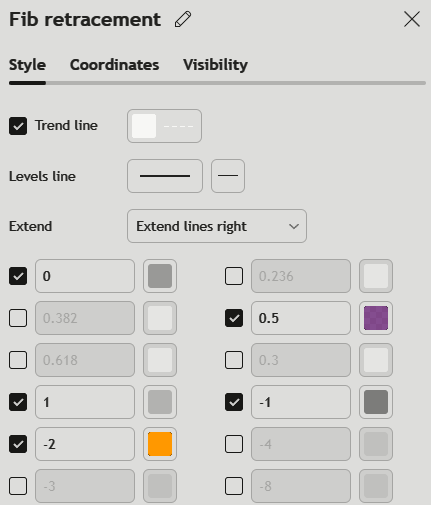
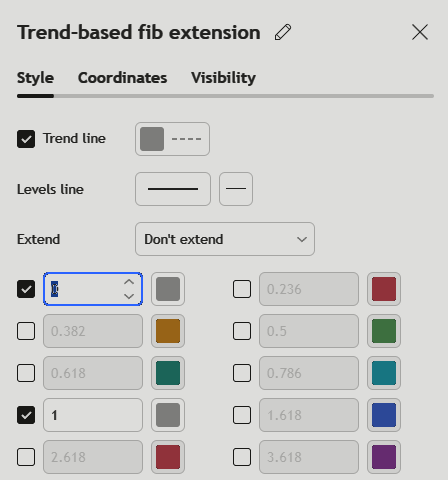
Set up the Fibonacci retracement tool and the trend-based Fibonacci extension tool in TradingView using the guides below. Configuration images are provided for both.
Fibonacci Retracement: Provides 50% retracement as well as levels for one and two measured moves higher.