A level is any area of price where traders are watching for the interaction of market participants — and observing how that area acts as support or resistance. A level that previously acted as resistance can, once broken, become support. The same applies in reverse. The level itself does not change. The expectations of traders around it do.
Levels are where traders look for entries and exits. Traders need to watch the interaction with the level to decide how to trade around it. That distinction is what this lesson builds toward.
How Levels Work
The way price interacts with a level comes from the expectations of traders and their eagerness to be involved. Markets tend to continue doing what they have been doing. Within a trading range, the expectation is that the range continues — that the high and the low hold. In a trend, trendlines and moving averages act as levels in the same way. The structure of the trend covered in Lesson 3 is itself a reference for where those levels sit.
Timeframe matters. A level on a higher timeframe carries more weight because it is watched by a broader group of participants. A prior day high that also sits at a significant weekly level attracts more attention than the same price viewed in isolation on a lower timeframe.
There are two categories of level:
- Major levels — widely watched across the market. These include moving averages, prior day high, low, and close, and swing highs and lows from HTF charts.
- Minor levels — context-driven. These include trading ranges, measured moves, 50% retracements, and the current day open, high, and low. Trading ranges and measured moves were covered in Lessons 5 and 7 — they belong here as levels because traders are watching for interaction at those same areas.
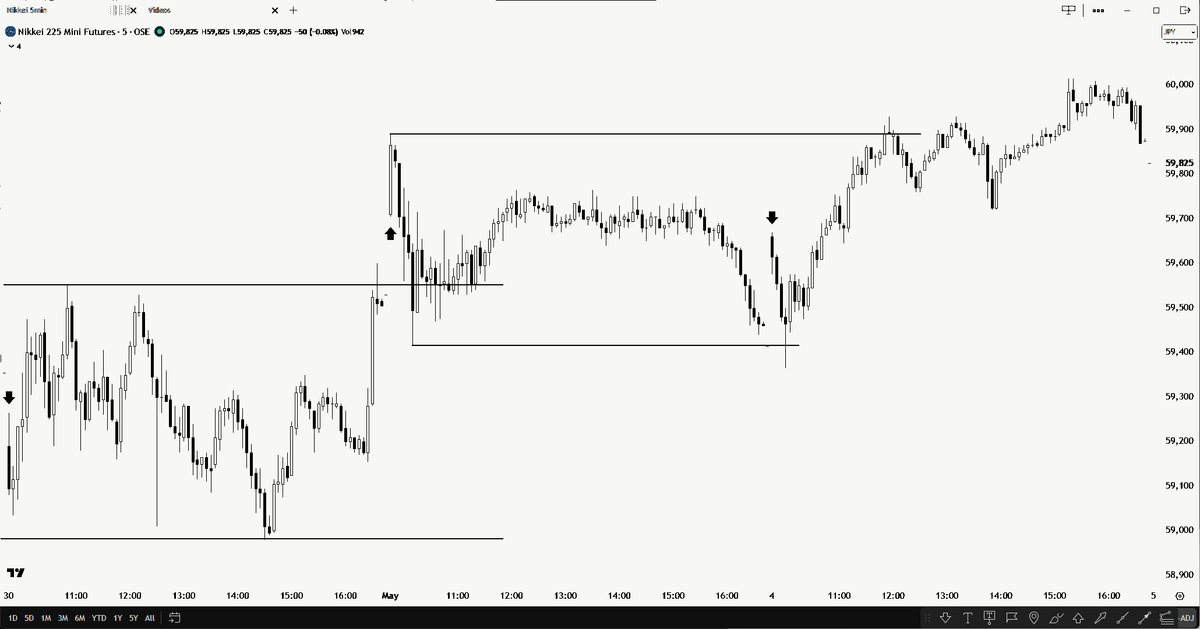
Prior Day High, Low, and Close
Prior day high, low, and close are among the most closely watched levels in intraday trading. Traders carry these as reference points and make decisions based on how price behaves around them.
The prior day close is where the session settled — the last agreed price between buyers and sellers before the market closed. Traders make decisions based on being above or below the prior day's close.
Reading how price interacts with prior day levels is the same exercise as reading individual candle behaviour — applied to the daily chart. The questions are the same: how is price responding at the level? Are there strong candles away from it? What are the wicks saying? Is there eagerness or hesitation at the level? Those responses are what traders are reading when they decide how to act.
Moving Averages as Dynamic Levels
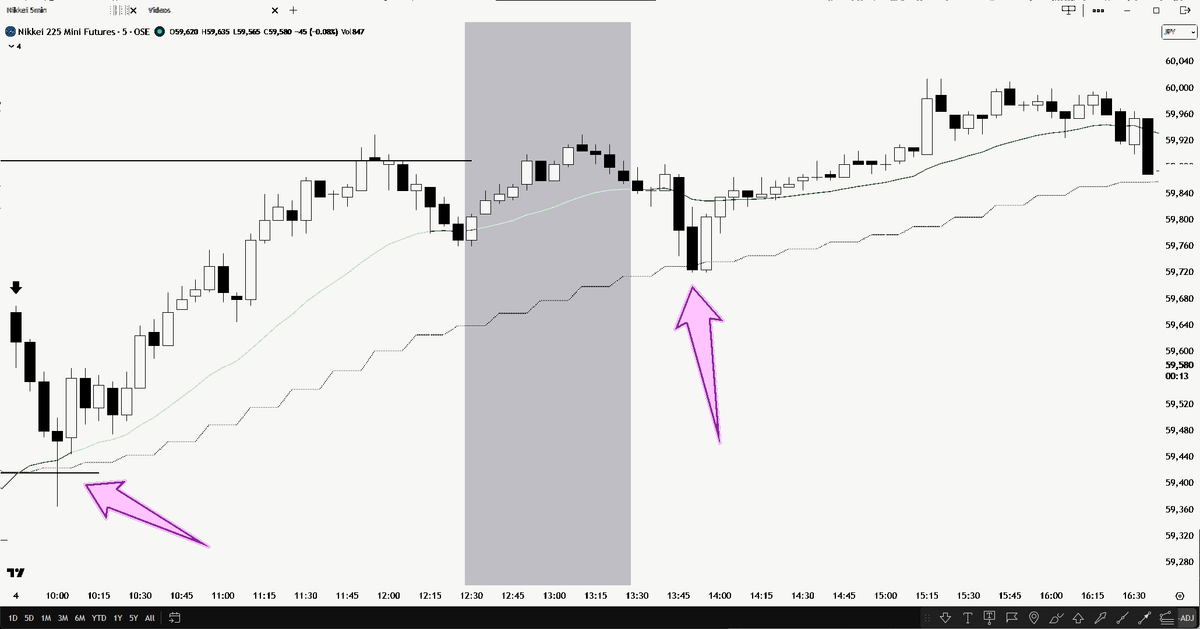
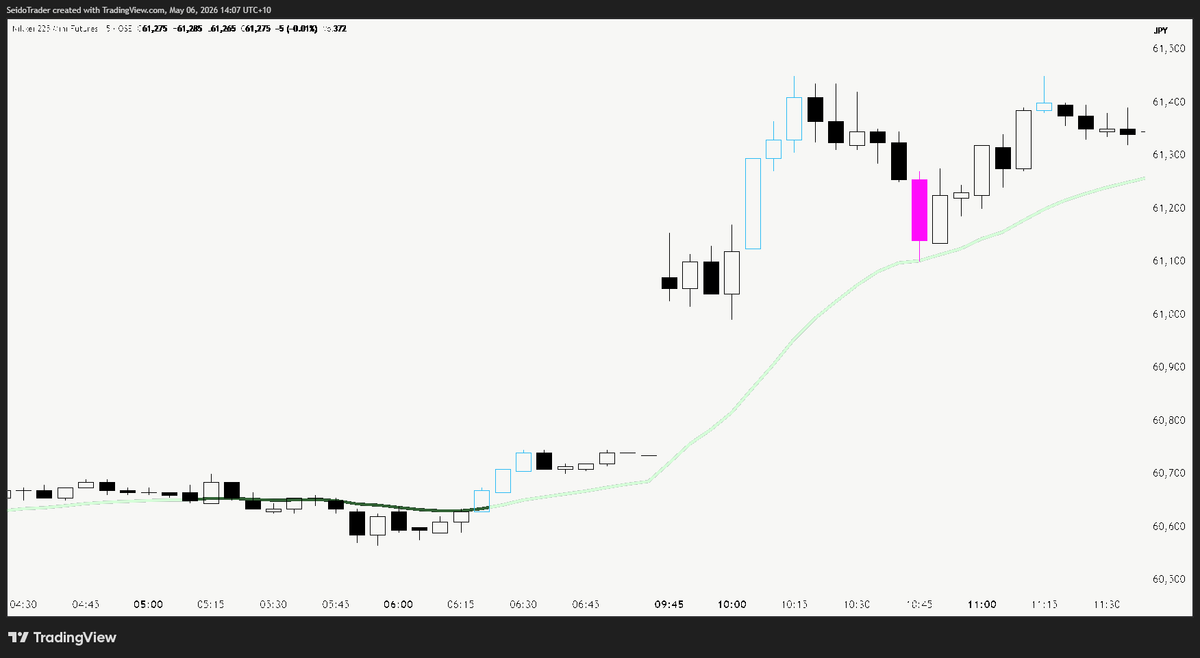
Moving averages act as dynamic levels — they move with price rather than sitting fixed on the chart. In a strong trend, the moving average can act as a magnet.
This can be deceiving, particularly for new traders. Within a strong trend there can be strong counter-trend momentum — and this is not necessarily a sign of strength from the opposing side. When price is extended from the moving average, traders who want to participate in the trend may be unwilling to chase price. They step aside and wait for a more favourable level. That absence of buyers is what causes price to fall back toward the moving average — sometimes with what appears to be strong momentum. This is also why some traders talk about low volume pullbacks but many of them do not comprehend the mechanics behind what that means.
When it arrives there, buyers step back in. It is not the opposing side taking control. It is the trend-side being patient about where they execute.
When price arrives at the moving average, traders read the response in the same way as any other level — candle behaviour, wicks, and the presence or absence of eagerness signal whether the level is holding. The more confident traders are in their read of context, the earlier they will execute at the MA.
The significance of a major level comes from the breadth of participation. The more traders watching the same level, the stronger the potential response. HTF moving averages — 15-minute, hourly, and daily — carry more weight accordingly.
50% Retracements
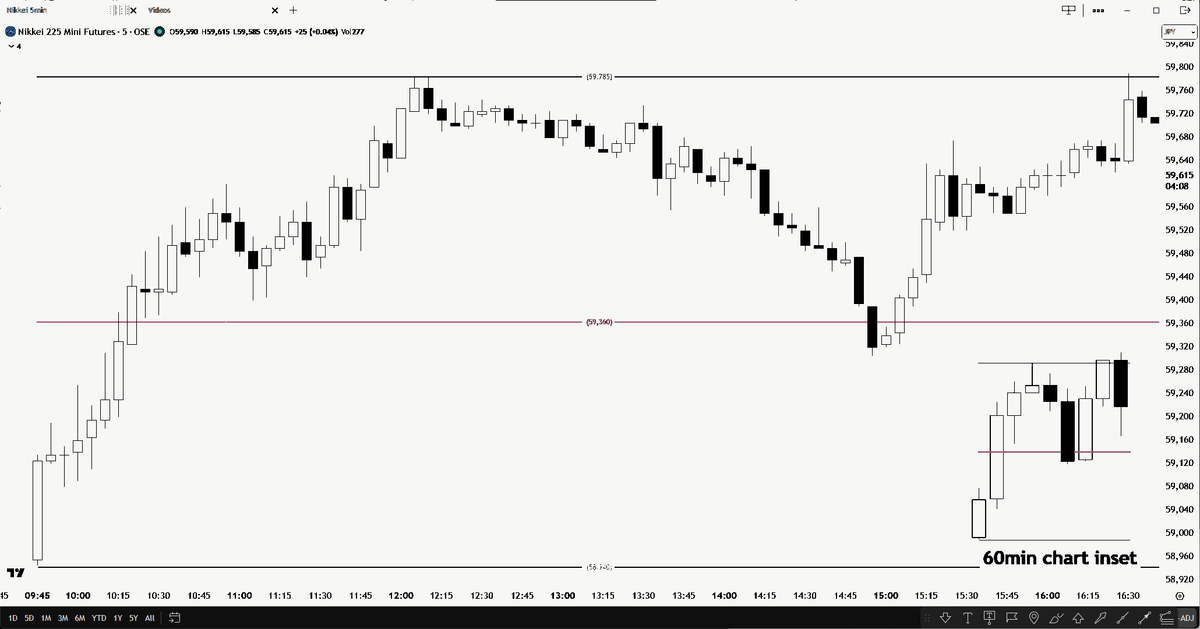
After a strong momentum push, the 50% retracement is one of the most reliable minor levels traders watch. It acts as a gauge for the relative strength of a move, and is where traders look for entries in the direction of the original momentum.
Two reasons this level works consistently: first, traders are looking to participate at a better price after strong momentum, and the 50% level provides that opportunity. Second, it sets up a one-to-one risk-to-reward trade. Traders at the 50% level only need a very slight edge for the system to be profitable over time.
Current Day Open, High, and Low
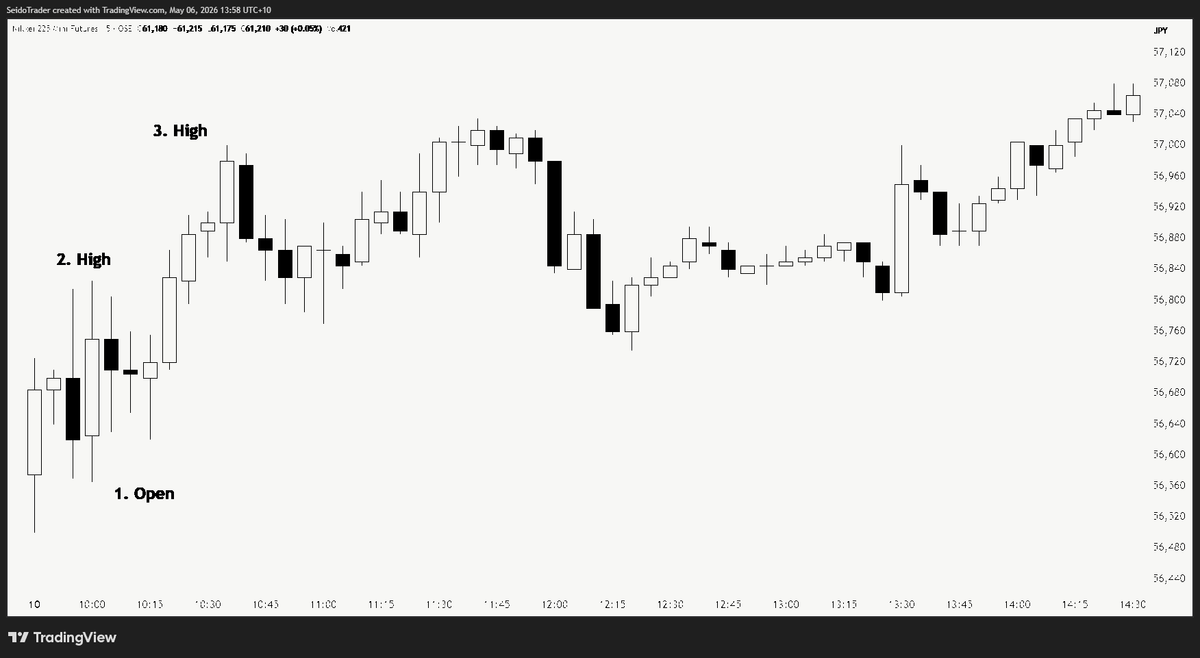
The current day open is the first agreed price of the session — where participants chose to engage when the session began. As the session develops, traders watch whether price holds above or below the open. Above it, traders who bought at the open are in profit. Below it, they are not.
The current day high and low develop as the session progresses, and become reference levels traders watch when making decisions about entries and exits for the remainder of the session.
Reading Momentum at a Level
Momentum into a significant level does not need continuation. Sometimes it is simply price being drawn toward the level — the level acting as a magnet rather than a point traders expect to break, and there are many potential reasons for the magnet effect as discussed here and in the prior lesson on measured moves.
Reading price at a level draws on everything covered in this series: candle behaviour from Lessons 1 and 2 — the strength of candles, wicks and gaps; higher timeframe context from Lesson 6 — whether the level aligns with something significant on a larger timeframe, and whether HTF participants are likely to respond.
At any point in time there is often both a bull case and a bear case present on the chart simultaneously — this is why traders can agree on current price. Context and market cycle determine which trade the well-prepared trader takes.
Confluence Between Levels
When multiple levels align at the same price, that is confluence. A 50% retracement that also sits at the prior day high, or at the EMA, is watched by a larger group of participants than either level in isolation. The level therefore attracts more participation.
Confluence was introduced in Lesson 7 in the context of measured moves. It applies equally here — and in practice, the strongest setups often involve measured move targets, prior day levels, and moving averages converging at the same price.
What to remember from this lesson
- A level is where traders watch for the interaction of market participants. The level does not change — the expectations of traders around it do. How price responds at a level is the decision, not the level itself.
- Major levels are watched by all traders: moving averages, prior day high, low, and close, and HTF swing highs and lows. Minor levels are context-driven: trading ranges, measured moves, 50% retracements, and current day open, high, and low.
- Reading price at prior day levels is the same exercise as reading candle behaviour — eagerness, hesitation, strong closes, and wicks all apply.
- Moving averages are dynamic levels. Counter-trend momentum into the MA is often patient trend-side traders waiting for a better price — not the opposing side taking control.
- The 50% retracement is a minor level after a momentum move. It offers a one-to-one risk-to-reward trade, requiring only a slight edge to be profitable over time.
- Confluence is when multiple levels align at the same price. The more participants watching the same level from different reference points, the stronger the potential response.
Annotation Checklist
- Strong bullish and bearish candles
- Swing closes and interaction observations
- Significant gaps within momentum areas
- Shaved bars
- Momentum area
- Trading range area
- Climax / exhaustion candles
- Trendlines (only where clearly defined)
- 20 EMA and HTF EMA interactions
- First EMA pullback after a momentum leg
- Consolidation range
- Momentum out of the trading ranges
- Retest levels
- Late-trend consolidation
- Measured move targets
- Prior day high and low (pHOD / pLOD) — marked before the session opens
- 50% retracement levels — measured on significant momentum moves
- Current day open, high, and low — updated as the session develops
- Confluence noted — where two or more levels align at the same price
Coursework
If the Fibonacci tool is not already configured for 50% retracements, set that up now and use it to assess momentum-based moves as they develop.
- Choose a futures contract such as the ES or Nikkei mini futures. Switch the TradingView chart to day session trading hours so the prior day high and low are clearly visible for each session.
- Go back at least one month and look at how price responded at the prior day high and prior day low across each session. When price moved with momentum into the level, observe the response and record what was there. This builds understanding of how price responds at a level.
- When annotating charts going forward, mark pHOD and pLOD and any significant 50% retracements that provided support or resistance. These are the levels professional intraday traders watch in their premarket analysis.
- Note where confluence was present — a 50% retracement sitting at the EMA, or at the prior day high, is a meaningful observation.
- Add the criteria that fit with your understanding into the strategy document built in Lesson 4.